
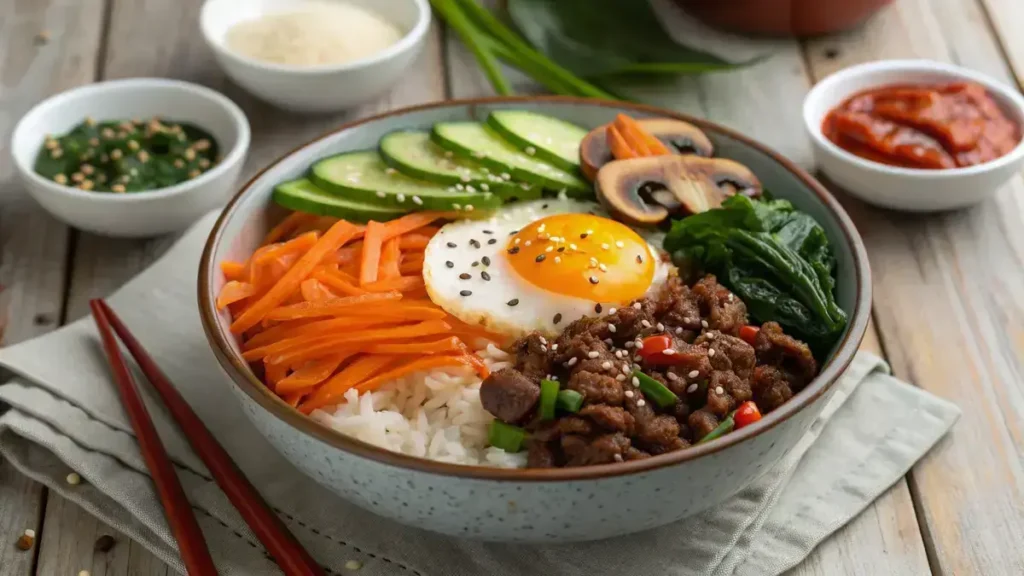
Bibimbowl invites your taste buds on a colorful journey through Korean inspired flavors, all in one comforting bowl. Tender beef marinated in soy sauce, garlic, and a touch of apple cider vinegar pairs beautifully with vibrant vegetables like spinach, sweet carrots, earthy shiitake mushrooms, and fresh bean sprouts, all layered over warm, fluffy rice. A swirl of gochujang mixed with sesame oil and a hint of honey brings a bold spicy sweet kick, while toasted sesame seeds and crisp cucumber ribbons add the finishing touch. Every bite feels nourishing and joyful, turning a simple meal into a celebration.
Table of Contents
Why You’ll Love This bibimbowl
- It’s a colorful feast for the eyes and the taste buds!
- Packed with healthy veggies, it’s a guilt-free indulgence.
- Quick to prepare, perfect for busy weeknights.
- Customizable to suit your taste—add your favorite proteins!
- A delightful blend of flavors that will transport you to Korea.
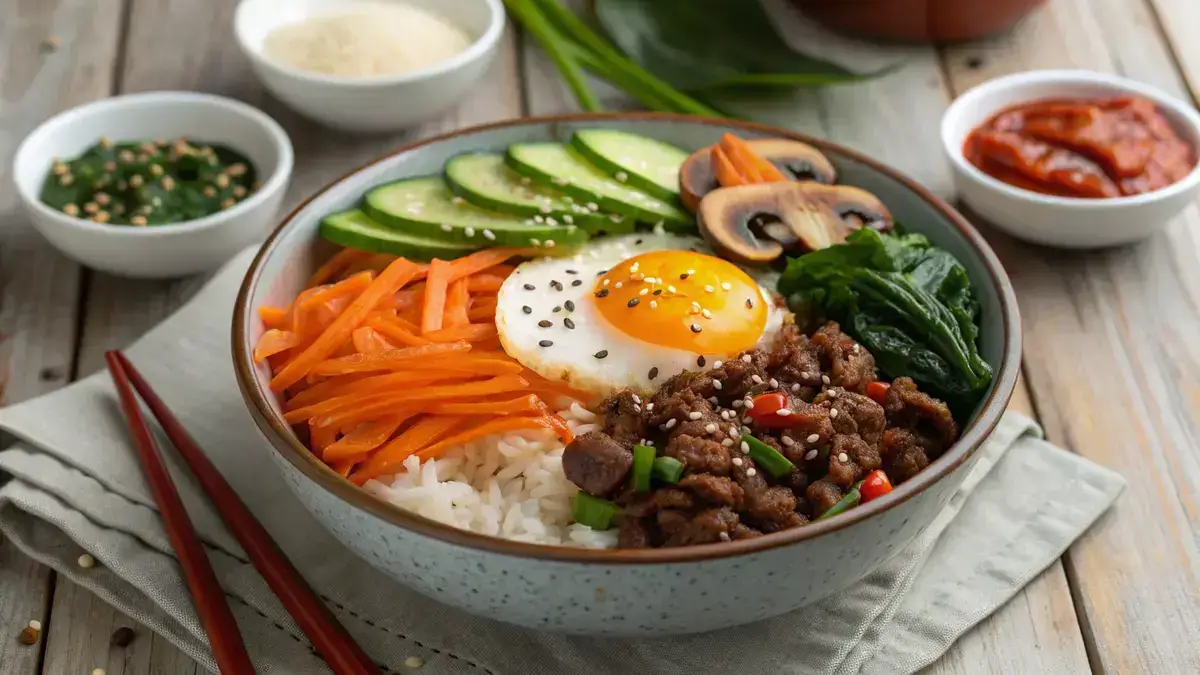
bibimbowl
Ingredients
Equipment
Method
- Cook short-grain rice according to package instructions and keep warm.
- In a bowl, combine ground beef with 1 tbsp soy sauce, 1 tsp sugar, minced garlic, salt, and pepper. Set aside for 10 minutes.
- Sauté carrots, cucumber, spinach, and mushrooms separately in a lightly oiled pan over medium heat until just tender; season each with a pinch of salt.
- In the same pan, cook marinated beef until browned and fully cooked; set aside.
- In a nonstick pan, fry an egg sunny-side up or to your preference.
- Divide warm rice into serving bowls. Arrange beef, vegetables, nori strips, and fried egg on top of the rice in sections.
- Whisk together remaining soy sauce, sesame oil, gochujang, and sesame seeds. Drizzle over the assembled bowls.
- Mix everything together before eating and enjoy your bibimbowl.
Notes
| Nutrient | Amount per Serving |
|---|---|
| Calories | 500 |
| Fat | 20g |
| Protein | 25g |
| Carbs | 60g |
Ingredients
Here’s everything you need to create a delicious bibimbowl!
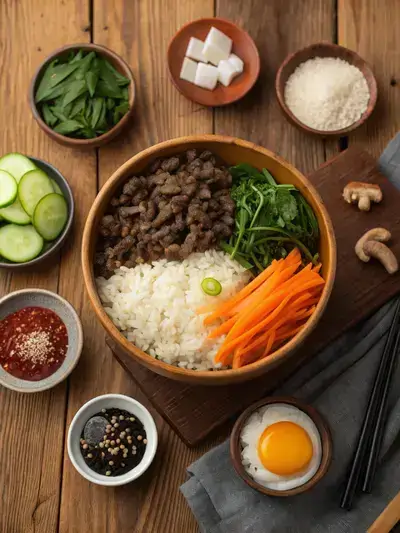
- 2 cups cooked short-grain rice – base of the bowl
- 200g ground beef (or tofu for vegetarian) – protein option
- 1 small carrot – julienned for crunch
- 1 small cucumber – julienned for freshness
- 1 cup spinach – blanched and squeezed
- 4 shiitake mushrooms – sliced for umami
- 1 sheet nori – cut into strips for garnish
- 1 egg – cooked sunny-side up for richness
- 2 cloves garlic – minced for flavor
- 2 tbsp soy sauce – seasoning
- 1 tbsp sesame oil – for nuttiness
- 1 tsp sugar – balance the flavors
- 1 tsp gochujang – Korean chili paste for spice
- 1 tbsp sesame seeds – for crunch and garnish
- Salt and pepper to taste – to season
How to Make bibimbowl
This delicious bibimbowl takes about 15 minutes to prepare and 20 minutes to cook, making it a quick and healthy meal option. Allow an extra 10 minutes for marinating the beef. Get ready to enjoy a colorful and nutritious rice bowl!
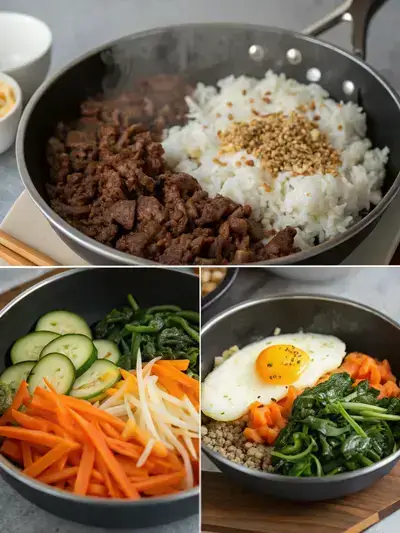
Step 1: Prepare rice
Cook short-grain rice according to package instructions and keep warm.
Step 2: Marinate beef
In a bowl, combine ground beef with 1 tbsp soy sauce, 1 tsp sugar, minced garlic, salt, and pepper. Set aside for 10 minutes.
Step 3: Cook vegetables
Sauté carrots, cucumber, spinach, and mushrooms separately in a lightly oiled pan over medium heat until just tender; season each with a pinch of salt.
Step 4: Cook beef
In the same pan, cook marinated beef until browned and fully cooked; set aside.
Step 5: Fry egg
In a nonstick pan, fry an egg sunny-side up or to your preference.
Step 6: Assemble bowl
Divide warm rice into serving bowls. Arrange beef, vegetables, nori strips, and fried egg on top of the rice in sections.
Step 7: Make sauce
Whisk together remaining soy sauce, sesame oil, gochujang, and sesame seeds. Drizzle over the assembled bowls.
Step 8: Serve immediately
Mix everything together before eating and enjoy your bibimbowl.
Recipe Snapshot
| Feature | Details |
|---|---|
| Category | Main Course |
| Cuisine | Korean |
| Prep Time | 15 minutes |
| Cook Time | 20 minutes |
| Extra Time | 10 minutes for marinating beef |
| Total Time | 45 minutes |
| Dietary | Can be made vegetarian |
| Serves | 2 |
| Best Served | Warm and mixed before eating |
Pro Tips for Making bibimbowl
- Prep all your veggies ahead of time for a smooth cooking process.
- Use a mix of fresh and pickled vegetables for added flavor and texture.
- Cook your rice in advance and let it cool slightly for the best results.
- Top with a fried egg for a delicious finishing touch.
- Experiment with different proteins like chicken or tofu for variety.
How to Serve this bibimbowl
- Top with a sunny-side-up egg for extra richness.
- Drizzle with sesame oil for a nutty flavor boost.
- Serve with kimchi on the side for a spicy kick.
- Pair with a refreshing cucumber salad to balance the meal.
- Offer gochujang (Korean chili paste) for those who love heat.
- Enjoy with a side of pickled vegetables for added crunch.
- Garnish with toasted sesame seeds for a delightful finish.
Make Ahead and Storage
Storing and enjoying your bibimbowl later is easy!
Storing Leftovers
- Allow the bibimbowl to cool to room temperature.
- Transfer leftovers to an airtight container.
- Store in the refrigerator for up to 3 days.
- Keep the sauce separate to maintain texture.
Freezing
- Cool the bibimbowl completely before freezing.
- Use freezer-safe containers or bags.
- Label with the date and contents.
- Freeze for up to 2 months for best quality.
Reheating
- Thaw frozen bibimbowl in the refrigerator overnight.
- Reheat in a microwave-safe dish, covered, for even heating.
- Stir occasionally to ensure even warmth.
- Add a splash of water or sauce to maintain moisture.
Explore more easy breakfast recipes, quick lunch ideas, cozy dinner meals, tasty snacks, and delightful dessert.
FAQs
Here’s a helpful FAQ about this recipe:
1. What is a bibimbowl?
A bibimbowl is a delicious and colorful Korean dish that typically consists of a base of rice topped with a variety of vegetables, protein (like beef or tofu), and a fried egg. It’s often served with gochujang, a spicy red pepper paste, which adds a wonderful kick to the dish. The ingredients are mixed together before eating, creating a harmonious blend of flavors and textures that is both satisfying and nutritious.
2. What is bibimbowl in bonchon?
In Bonchon, a popular Korean fried chicken chain, the bibimbowl is a variation of the traditional bibimbap. It features their signature fried chicken served over a bed of rice and topped with fresh vegetables and a spicy sauce. This fusion of flavors makes it a unique and tasty option for those looking to enjoy a Korean meal with a twist.
3. What is bibimbap made of?
Bibimbap is made of a variety of ingredients that can include cooked rice, assorted vegetables (like spinach, carrots, and zucchini), a protein source (such as beef, chicken, or tofu), and a fried egg on top. It’s often garnished with sesame oil and served with gochujang for added flavor. The beauty of bibimbap lies in its versatility, allowing you to customize it with your favorite ingredients.
4. Is bibibowl Korean or Japanese?
Bibimbowl is a Korean dish, closely related to bibimbap. While both dishes share similar ingredients and preparation methods, bibimbowl often emphasizes a more casual, bowl-style presentation. The roots of bibimbap can be traced back to Korea, making it a beloved staple in Korean cuisine, celebrated for its balance of flavors and nutritional value.
Final Thoughts
Now that you have this easy bibimbowl recipe in your hands, it’s time to get cooking! Picture the vibrant colors and delightful flavors coming together in one bowl. Enjoy the simplicity and satisfaction of creating a dish that’s not only healthy but also bursting with joy. Dive in and savor every bite—your taste buds will thank you!