

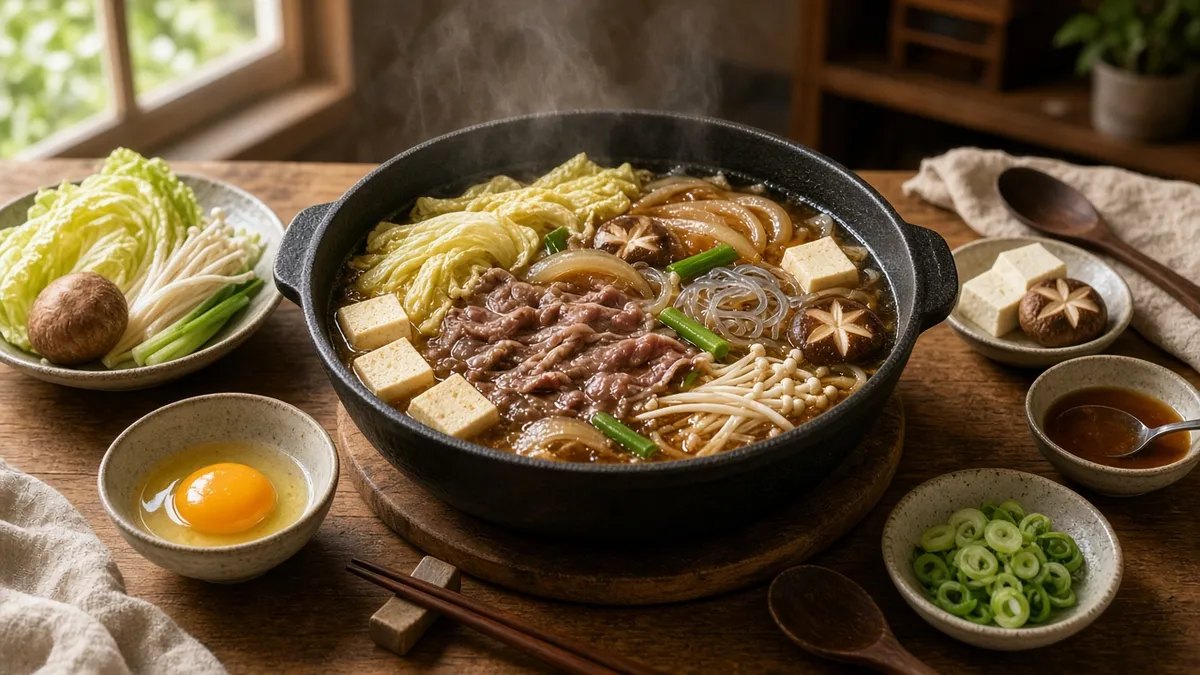
Recipe card
Print / PDFCozy Homemade Sukiyaki
Rate this recipe
Be the first to rate
- Prep Time
- 20 mins
- Cook Time
- 25 mins
- Total Time
- 45 mins
Ingredients
- 1 1/2 pounds thinly sliced beef
- 6 cups low-sodium beef broth
- 1/2 cup low-sodium soy sauce
- 3 tablespoons brown sugar
- 1 tablespoon grated fresh ginger
- 2 garlic cloves, minced
- 1 tablespoon cooking oil
- 1 large yellow onion, thinly sliced
- 8 ounces shiitake mushrooms, sliced
- 1 small napa cabbage, chopped
- 1 block firm tofu, cut into 1-inch cubes
- 8 ounces shirataki or rice noodles
- 4 green onions, sliced
- 1 cup shredded carrots
Equipment
- Large deep skillet or tabletop hot pot — Use a wide pan that can hold the broth and vegetables.
- Medium mixing bowl — For whisking the seasoned broth.
- Sharp chef's knife — For slicing vegetables, tofu, and green onions.
- Cutting board — Keep one side clean for the cooked ingredients.
- Instant-read thermometer — For checking that the beef reaches 145°F.
Method
- 1
Whisk the beef broth, soy sauce, brown sugar, ginger, and garlic in a bowl.
- 2
Prepare the noodles according to the package directions.
- 3
Heat the cooking oil in a large deep skillet or tabletop hot pot.
- 4
Cook the onion for 3 minutes until it begins to soften.
- 5
Add the mushrooms, napa cabbage, tofu, and carrots to the skillet.
- 6
Pour the seasoned broth over the vegetables and tofu.
- 7
Simmer the mixture for 8 minutes until the vegetables are tender.
- 8
Add the cooked noodles to the simmering broth.
- 9
Arrange the sliced beef over the top of the simmering mixture.
- 10
Cook the beef until it reaches 145°F and is no longer pink.
- 11
Scatter the green onions over the sukiyaki before serving.
Notes
| Nutrient | Amount per Serving |
|---|---|
| Calories | 600 |
| Fat | 27g |
| Protein | 46g |
| Carbs | 45g |
Why You'll Love This Sukiyaki
- It brings tender beef, hearty vegetables, tofu, and noodles together in one cozy pot.
- The savory broth has just the right balance of soy sauce, brown sugar, ginger, and garlic.
- It is a welcoming meal for sharing, whether you use a tabletop hot pot or a deep skillet.
- Everything cooks in stages, making this Japanese-inspired dinner simple to prepare.
- Leftovers make a comforting lunch the next day.
Ingredients
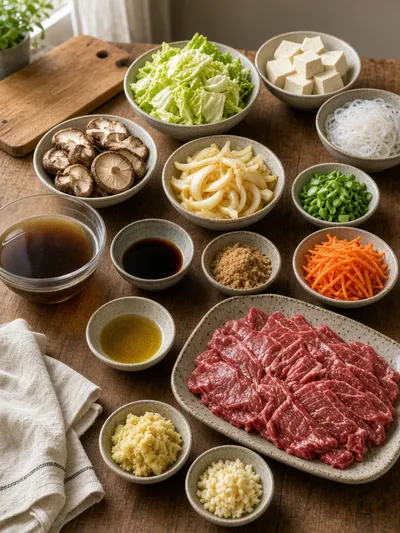
Gather these simple ingredients for a colorful, comforting pot of sukiyaki. Thinly sliced beef cooks quickly, while the vegetables and noodles make every bowl satisfying.
- Thinly sliced beef - 1 1/2 pounds
- Low-sodium beef broth - 6 cups
- Low-sodium soy sauce - 1/2 cup
- Brown sugar - 3 tablespoons
- Fresh ginger - 1 tablespoon, grated
- Garlic - 2 cloves, minced
- Cooking oil - 1 tablespoon
- Yellow onion - 1 large, thinly sliced
- Shiitake mushrooms - 8 ounces, sliced
- Napa cabbage - 1 small, chopped
- Firm tofu - 1 block, cut into 1-inch cubes
- Shirataki or rice noodles - 8 ounces
- Green onions - 4, sliced
- Shredded carrots - 1 cup
How to Make Sukiyaki
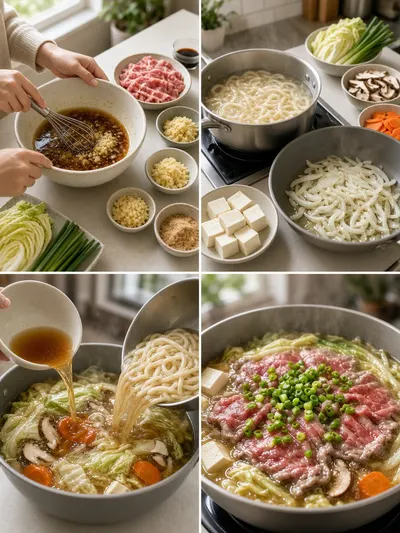
Plan for about 20 minutes of prep and 25 minutes of cooking. There is no separate resting time, so this warm, generous meal can go from the kitchen to the table in about 45 minutes.
Step 1: Mix the Seasoned Broth
Whisk the beef broth, soy sauce, brown sugar, ginger, and garlic in a bowl. Stir until the brown sugar is mostly dissolved and the mixture smells fragrant.
Step 2: Prepare the Noodles
Prepare the noodles according to the package directions. Drain them well and set them aside so they are ready when the broth is simmering.
Step 3: Heat the Oil
Heat the cooking oil in a large deep skillet or tabletop hot pot over medium heat. Choose a wide cooking vessel so the ingredients have room to simmer evenly.
Step 4: Soften the Onion
Cook the onion for 3 minutes until it begins to soften. Give it an occasional stir so the slices warm evenly without browning too much.
Step 5: Add the Vegetables and Tofu
Add the mushrooms, napa cabbage, tofu, and carrots to the skillet. Arrange them gently so the tofu keeps its shape and the vegetables are spread throughout the pot.
Step 6: Pour in the Broth
Pour the seasoned broth over the vegetables and tofu. Bring the liquid to a gentle simmer, taking care around the hot broth.
Step 7: Simmer the Vegetables
Simmer the mixture for 8 minutes until the vegetables are tender. The broth will mingle with the mushrooms, cabbage, and tofu as everything warms together.
Step 8: Add the Noodles
Add the cooked noodles to the simmering broth. Use tongs or chopsticks to gently separate them so they can soak up the savory flavors.
Step 9: Arrange the Beef
Arrange the sliced beef over the top of the simmering mixture. Keeping the slices in a loose layer helps them cook evenly and makes them easy to serve.
Step 10: Cook the Beef Safely
Cook the beef until it reaches 145°F and is no longer pink. Check the thickest pieces with a food thermometer, since the cooking time can vary with the slice thickness.
Step 11: Finish with Green Onions
Scatter the green onions over the sukiyaki before serving. Bring the pot to the table while it is warm and let everyone fill a bowl with their favorite bites.
Recipe Snapshot
| Feature | Details |
|---|---|
| Category/Course | Dinner |
| Cuisine | Japanese-inspired |
| Prep Time | 20 minutes |
| Cook Time | 25 minutes |
| Extra Time | 0 minutes |
| Total Time | 45 minutes |
| Dietary | Dairy-free and alcohol-free |
| Serves | 4 |
| Best Served | Warm, right from the shared pot |
Pro Tips for Making Sukiyaki
- Ask your butcher for thinly sliced beef, or partially freeze the beef before slicing it at home for easier, even cuts.
- Keep the broth at a gentle simmer rather than a hard boil to help the tofu stay intact and the beef remain tender.
- Prepare all the vegetables before cooking because the recipe moves quickly once the pot is hot.
- If using shirataki noodles, rinse and drain them well according to the package directions before adding them to the pot.
- Use low-sodium broth and soy sauce so the sweetness and savory flavors stay balanced.
How to Serve Sukiyaki
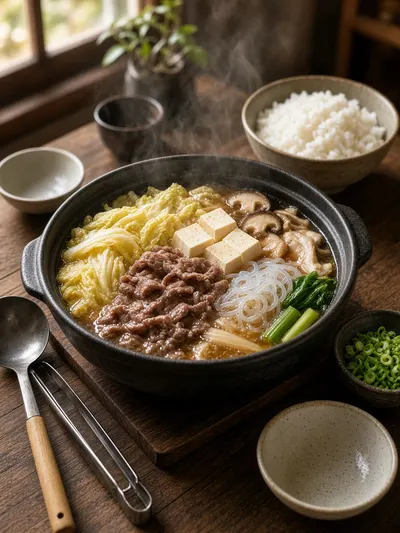
- Set the hot pot in the middle of the table and let everyone serve themselves with a ladle and tongs.
- Offer small bowls so each person can choose a little beef, tofu, noodles, and several vegetables.
- Serve with extra sliced green onions for a fresh, bright finish.
- Pair the sukiyaki with steamed rice if you would like an even heartier dinner.
Make Ahead and Storage
Storing Leftovers
- Let leftovers cool promptly, then place them in a covered container in the refrigerator.
- Store leftovers for up to 3 days and keep the broth, beef, vegetables, and noodles together for easy reheating.
- Use clean utensils when serving leftovers to help keep the meal fresh.
Freezing
- Freeze the cooked beef, vegetables, tofu, and broth in an airtight freezer-safe container for up to 2 months.
- Noodles can soften in the freezer, so for the best texture, prepare fresh noodles when serving the thawed sukiyaki.
- Thaw the frozen sukiyaki in the refrigerator before reheating.
Reheating
- Reheat the sukiyaki gently in a saucepan over medium-low heat until it is steaming hot throughout.
- Stir occasionally and add a small splash of broth or water if the liquid has reduced.
- If adding fresh noodles, warm them separately according to the package directions and add them just before serving.
Explore more easy breakfast recipes, quick lunch ideas, cozy dinner meals, tasty snacks, and delightful dessert.
Final Thoughts
This cozy homemade sukiyaki is a lovely way to gather everyone around the table for a warm, colorful, and satisfying dinner.
FAQs
Here are a few helpful answers for making and serving this comforting sukiyaki.
What kind of beef is best for sukiyaki?
Thinly sliced beef is best because it cooks quickly and stays tender in the simmering broth. Ribeye or sirloin sliced very thinly are good choices.
Can I use different vegetables?
Yes. You can replace or add vegetables such as bok choy, spinach, or sliced bell peppers while keeping the broth and cooking method the same.
Can I make sukiyaki without a tabletop hot pot?
Absolutely. A large deep skillet or Dutch oven works well. Cook the sukiyaki on the stove, then carefully bring the hot skillet to the table if it is safe to do so.
How do I know when the beef is done?
Use a food thermometer to check that the beef reaches 145°F, and make sure it is no longer pink in the center. Thin slices should cook quickly in the simmering broth.
Kitchen notes
Nutrition & sources
Calorie and nutrition figures on this page are estimates meant for general home-cooking guidance. Actual values vary with brands, portion size, and how the recipe is prepared.
Estimates draw on typical ingredient data from public nutrition databases such as the USDA FoodData Central. They are not a substitute for professional medical or dietary advice.
For how recipes are tested and when pages are updated, see How we test recipes. Full legal context lives in our disclaimers and affiliate disclosure.


Comments
Made this recipe? Share how it turned out for your family.
No comments yet — be the first to leave a note.