
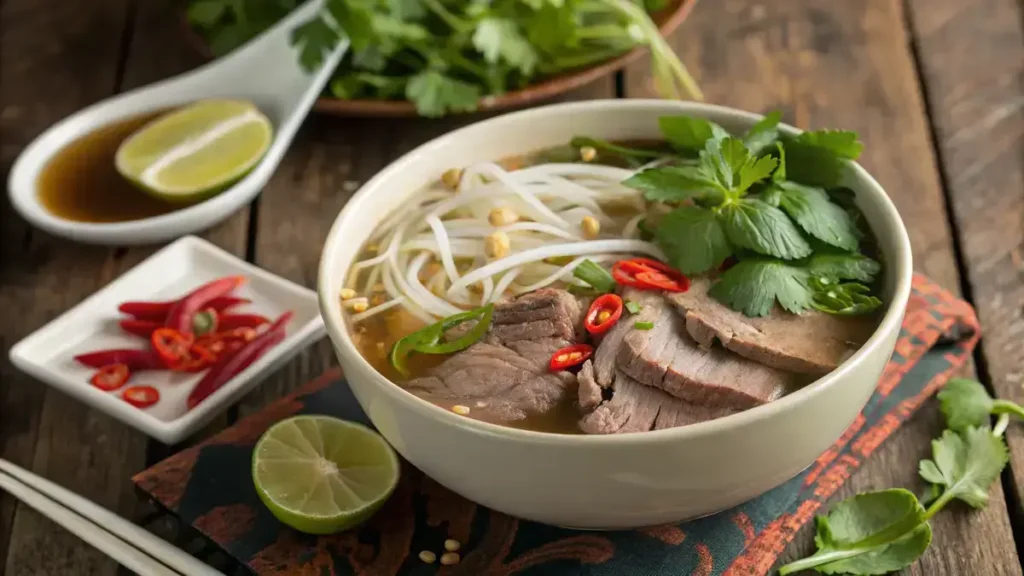
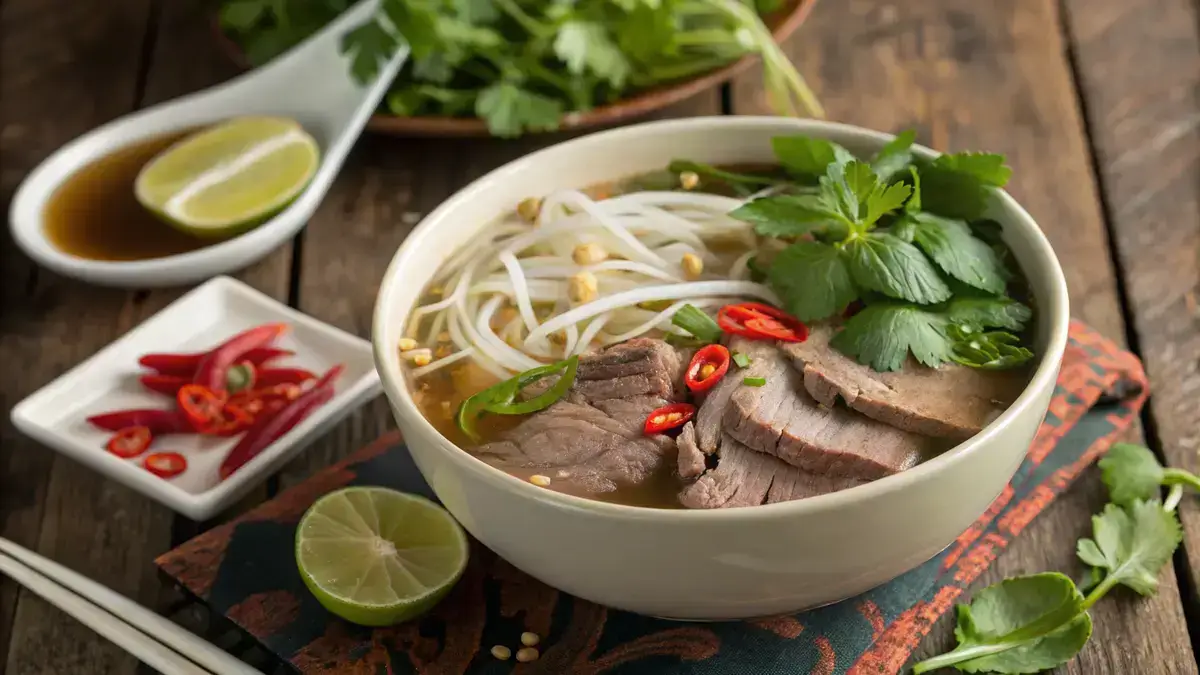
Pho Ha Noi is a comforting Vietnamese noodle soup known for its deeply aromatic broth and fresh, vibrant garnishes. Rice noodles and thin slices of beef are served in a savory spiced stock infused with cinnamon, star anise, ginger, and onion, creating a rich yet balanced flavor. Finished with herbs, bean sprouts, lime, and chilies, this classic dish delivers warmth, freshness, and customizable taste in every bowl.
Table of Contents
Why You’ll Love This pho ha noi
- Experience the rich, aromatic flavors of traditional Vietnamese cuisine.
- Enjoy a comforting bowl that warms your soul on chilly days.
- Customize your toppings for a personalized touch every time.
- Delight in a healthy meal packed with fresh herbs and spices.
pho ha noi
Ingredients
Equipment
Method
- Begin by charring the ginger and onion. Place them directly over an open flame or under a broiler until they are nicely charred. This adds a wonderful depth of flavor to your broth.
- In a large pot, add beef bones and cover them with water. Bring to a boil and then reduce to a simmer. Let it cook for several hours, skimming off any foam that rises to the top. This will help create a clear broth.
- Once the broth is simmering, add the charred ginger, onion, star anise, cloves, cinnamon, salt, fish sauce, and rock sugar. Continue simmering to develop a rich and clear broth.
- While the broth is simmering, soak the rice noodles in warm water until they are tender. This usually takes about 10 minutes. Drain and set aside.
- Thinly slice your beef and blanch it in the hot broth until just cooked. This should only take a minute or two, so keep an eye on it!
- In serving bowls, place a portion of the soaked noodles and top with the blanched beef. Ladle the hot broth over the noodles and beef.
- Garnish your Pho Ha Noi with chopped scallions, cilantro, Thai basil, bean sprouts, lime wedges, and chili for that extra zing!
- Serve your delicious Pho Ha Noi with hoisin and sriracha on the side for dipping. Enjoy every slurp!
Notes
| Nutrient | Amount per Serving |
|---|---|
| Calories | 450 |
| Fat | 15g |
| Protein | 30g |
| Carbohydrates | 50g |
| Sugar | 5g |
| Sodium | 800mg |
Ingredients
Here are the essential ingredients you’ll need to make authentic Pho Ha Noi.
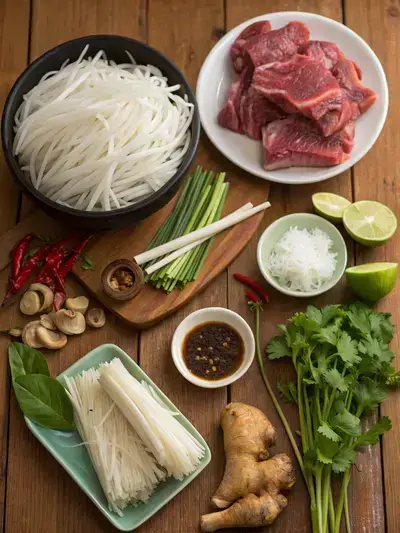
- Rice noodles – 400g, flat rice noodles for pho
- Beef bones – 2 kg, for a rich broth
- Water – 4 liters, to simmer the broth
- Ginger – 1 large piece, charred for flavor
- Onion – 1, halved and charred for the broth
- Star anise – 3-4 pods, for aromatic flavor
- Cloves – 4-5, to spice up the broth
- Cinnamon stick – 1, for warmth and depth
- Fish sauce – 3 tablespoons, for seasoning
- Rock sugar – 1 tablespoon, to balance flavors
- Salt – to taste, for seasoning
- Thinly sliced beef (sirloin or eye round) – 300g, for topping
- Scallions – 2, chopped for garnish
- Cilantro – a handful, for freshness
- Thai basil – a handful, for aromatic garnish
- Bean sprouts – 200g, for crunch
- Lime wedges – 2, for serving
- Chili slices – to taste, for heat
- Hoisin sauce – for serving, optional
- Sriracha – for serving, optional
How to Make Pho Ha Noi
Get ready to dive into the delicious world of Pho Ha Noi! This classic Vietnamese beef noodle soup is a labor of love, with a preparation time of about 30 minutes, a cooking time of 4-6 hours for the broth, and a custom time of 10 minutes for soaking the noodles. Let’s get started!
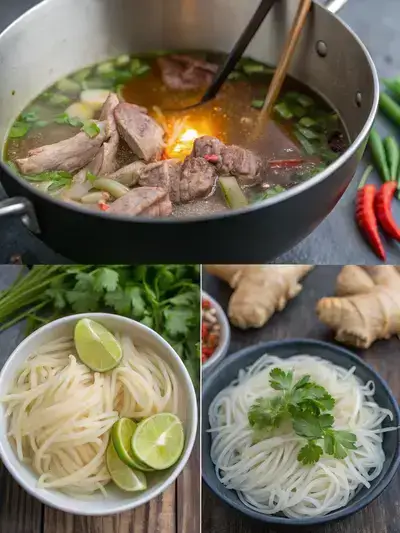
Step 1: Roast Ginger and Onion
Begin by charring the ginger and onion. Place them directly over an open flame or under a broiler until they are nicely charred. This adds a wonderful depth of flavor to your broth.
Step 2: Simmer Beef Bones
In a large pot, add beef bones and cover them with water. Bring to a boil and then reduce to a simmer. Let it cook for several hours, skimming off any foam that rises to the top. This will help create a clear broth.
Step 3: Add Aromatics
Once the broth is simmering, add the charred ginger, onion, star anise, cloves, cinnamon, salt, fish sauce, and rock sugar. Continue simmering to develop a rich and clear broth.
Step 4: Soak Rice Noodles
While the broth is simmering, soak the rice noodles in warm water until they are tender. This usually takes about 10 minutes. Drain and set aside.
Step 5: Blanch Beef
Thinly slice your beef and blanch it in the hot broth until just cooked. This should only take a minute or two, so keep an eye on it!
Step 6: Assemble Bowls
In serving bowls, place a portion of the soaked noodles and top with the blanched beef. Ladle the hot broth over the noodles and beef.
Step 7: Garnish
Garnish your Pho Ha Noi with chopped scallions, cilantro, Thai basil, bean sprouts, lime wedges, and chili for that extra zing!
Step 8: Serve
Serve your delicious Pho Ha Noi with hoisin and sriracha on the side for dipping. Enjoy every slurp!
Recipe Snapshot
| Feature | Details |
|---|---|
| Category | Main Course |
| Cuisine | Vietnamese |
| Prep Time | 30 minutes |
| Cook Time | 240 minutes |
| Extra Time | 10 minutes (soaking noodles) |
| Total Time | 280 minutes |
| Dietary | Beef-based |
| Serves | 4 |
| Best Served | Hot with fresh garnishes! |
Pro Tips for Making pho ha noi
- Use high-quality beef bones for a rich, flavorful broth.
- Toast your spices before adding them to enhance their aroma.
- Let the broth simmer for several hours for the best depth of flavor.
- Serve with fresh herbs and lime for a bright, zesty finish.
- Don’t rush the noodle cooking; they should be perfectly tender.
How to Serve this pho ha noi
- Garnish with fresh herbs like basil, cilantro, and mint for a burst of flavor.
- Serve with lime wedges for a zesty kick.
- Add bean sprouts for a crunchy texture.
- Pair with hoisin sauce and sriracha for a customizable spice level.
- Enjoy with a side of crispy spring rolls for a delightful appetizer.
- For a refreshing drink, serve with iced jasmine tea or coconut water.
Make Ahead and Storage
Storing and enjoying your pho ha noi later is easy with these tips:
Storing pho ha noi Leftovers
- Allow the soup to cool to room temperature.
- Transfer to airtight containers.
- Store broth and noodles separately for best texture.
- Refrigerate for up to 3 days.
Freezing pho ha noi
- Cool the soup completely before freezing.
- Use freezer-safe containers or bags.
- Freeze broth and noodles separately.
- Consume within 2-3 months for best quality.
Reheating pho ha noi
- Thaw frozen broth in the refrigerator overnight.
- Reheat broth on the stove until simmering.
- Cook noodles separately in boiling water.
- Combine and serve with fresh herbs and lime.
Explore more easy breakfast recipes, quick lunch ideas, cozy dinner meals, tasty snacks, and delightful dessert.
FAQs
Here’s a helpful FAQ about this recipe:
1. What is Pho Ha Noi?
Pho Ha Noi is a traditional Vietnamese noodle soup that originates from Hanoi. It features a flavorful broth made from simmered beef bones, rice noodles, and a variety of herbs and spices. This dish is known for its aromatic and rich flavors, making it a beloved comfort food in Vietnam and beyond.
2. How does Pho Ha Noi differ from other regional pho varieties?
Pho Ha Noi is distinct from other regional varieties, such as Pho Ho Chi Minh, primarily in its broth and toppings. The Hanoi version typically has a clearer broth and is served with fewer garnishes, focusing on the purity of the beef flavor. Additionally, it often uses flat rice noodles, while other regions may use thicker noodles or different herbs.
3. What ingredients are typically used in Pho Ha Noi?
The key ingredients in Pho Ha Noi include beef bones for the broth, rice noodles (bánh phở), fresh herbs like cilantro and green onions, and spices such as star anise and cinnamon. The dish is usually topped with thinly sliced beef, bean sprouts, and lime, creating a delicious and aromatic experience.
4. Where can I find authentic Pho Ha Noi in Hanoi?
To find authentic Pho Ha Noi in Hanoi, you can visit local eateries and street vendors known for their pho. Popular spots include Pho Bat Dan and Pho Gia Truyen, where you can enjoy a steaming bowl of this classic dish made with traditional recipes and fresh ingredients, giving you a true taste of Hanoi’s culinary heritage.
Final Thoughts
As you savor your homemade Pho Ha Noi, let the warm, aromatic flavors transport you to the bustling streets of Vietnam. This simple yet rewarding dish is perfect for sharing with loved ones or enjoying solo. So grab your chopsticks, dive in, and relish every slurp of this comforting bowl of goodness!