
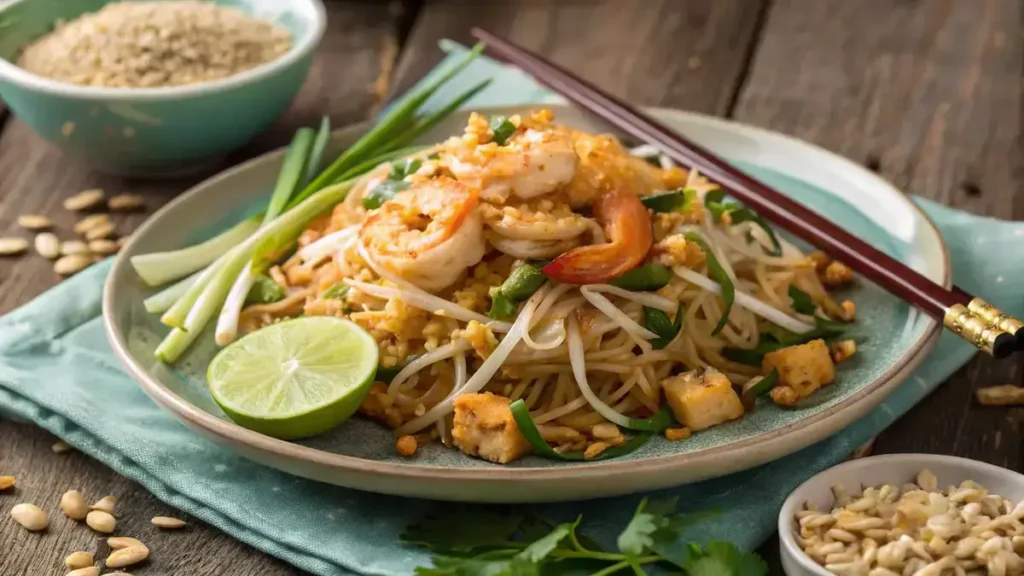
Pad Thai brings a lively mix of tangy tamarind rice noodles, crisp bean sprouts, and bright scallions tossed with plump shrimp or tofu. A quick sauce of lime juice, a touch of apple cider vinegar, and sweet savory notes creates that classic balance. Finished with silky egg, crunchy roasted peanuts, and a gentle hint of chili, every bite feels fresh and comforting. Easy and fast, this homemade favorite turns weeknights or casual gatherings into a Thailand inspired feast.
Table of Contents
Why You’ll Love This pad thai
- Quick and easy to whip up for a weeknight dinner.
- Authentic flavors that transport you straight to Thailand.
- Customizable with your favorite proteins and veggies.
- Perfect balance of sweet, salty, and tangy in every bite.
- Healthy ingredients that make you feel good inside and out.
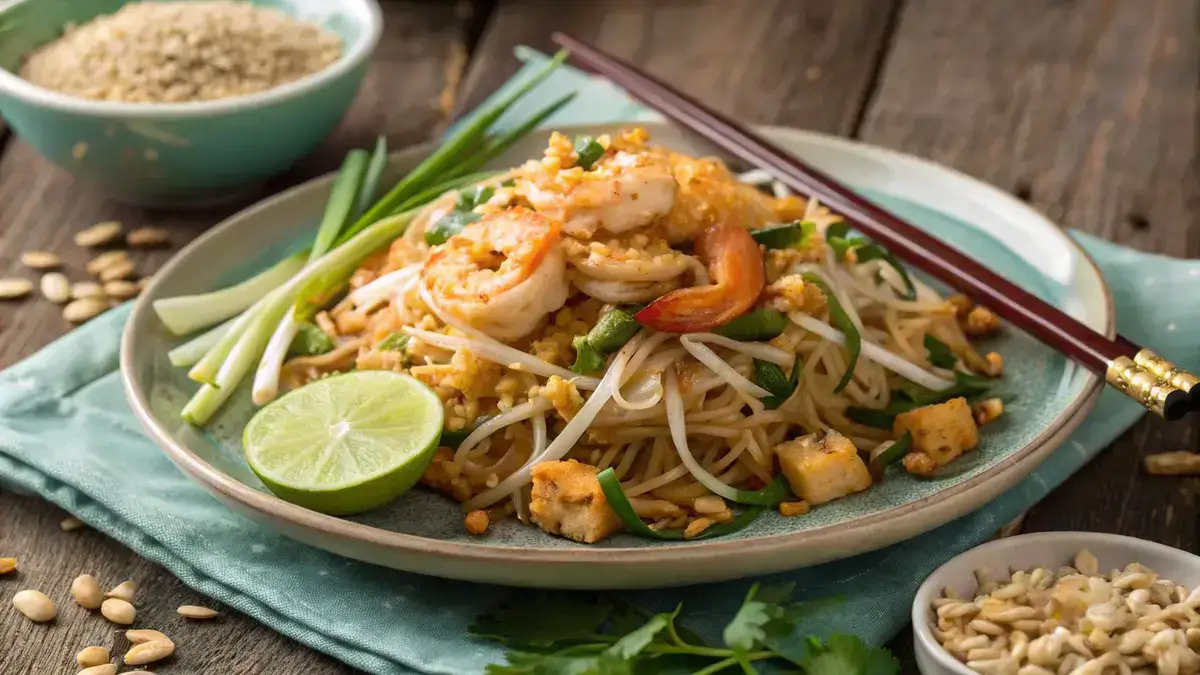
pad thai
Ingredients
Equipment
Method
- Step 1: Soak the Noodles – Start by soaking the rice noodles in warm water until they become pliable. This usually takes about 20-30 minutes. Make sure they’re not too soft!
- Step 2: Make the Sauce – In a bowl, whisk together tamarind paste, fish sauce, and palm sugar. This will be the flavorful sauce that brings your Pad Thai to life!
- Step 3: Sauté Aromatics – Heat some oil in a wok over medium heat. Add minced garlic and shallots, sautéing until they’re fragrant and golden. Your kitchen will smell amazing!
- Step 4: Cook the Protein – Add tofu and shrimp to the wok. Cook until the shrimp turns pink and the tofu is golden. This should take about 3-4 minutes.
- Step 5: Scramble the Eggs – Push the cooked ingredients to one side of the wok. Pour in beaten eggs and scramble them until just set. Mix everything together once done!
- Step 6: Combine Noodles and Sauce – Add the drained noodles and the sauce to the wok. Toss everything together to coat the noodles evenly with the sauce.
- Step 7: Add Fresh Ingredients – Stir in bean sprouts and sliced scallions. Give it a good toss to mix everything well. You’re almost there!
- Step 8: Serve and Enjoy – Serve your Pad Thai hot, garnished with crushed peanuts and lime wedges. Dig in and enjoy your homemade Thai noodles!
Notes
| Nutrition Facts | Per Serving |
|---|---|
| Calories | 400 |
| Fat | 15g |
| Protein | 20g |
| Carbs | 50g |
Ingredients
Gather these ingredients to make a delicious Pad Thai!
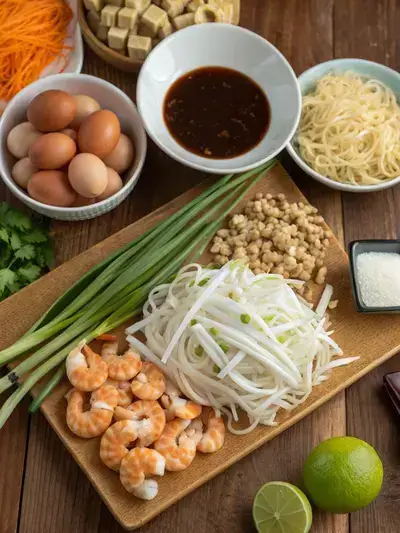
- Rice noodles – 8 oz; flat, dried rice noodles for authentic texture
- Tamarind paste – 2 tbsp; adds a tangy flavor
- Fish sauce – 3 tbsp; brings umami depth
- Palm sugar – 1 tbsp; natural sweetness
- Eggs – 2; scrambled for protein
- Bean sprouts – 1 cup; adds crunch
- Garlic – 3 cloves; minced for aromatic flavor
- Shallots – 2; thinly sliced for sweetness
- Firm tofu – 7 oz; cubed for a vegetarian option
- Shrimp – 8 oz; peeled and deveined for protein
- Roasted peanuts – 1/4 cup; crushed for topping
- Scallions – 2; chopped for garnish
- Vegetable oil – 3 tbsp; for frying
- Lime wedges – for serving; fresh acidity for balance
How to Make Pad Thai
This delicious Pad Thai recipe takes about 15 minutes to prepare and 10 minutes to cook. With a little extra time for soaking the noodles, you’ll have a delightful meal ready in no time!
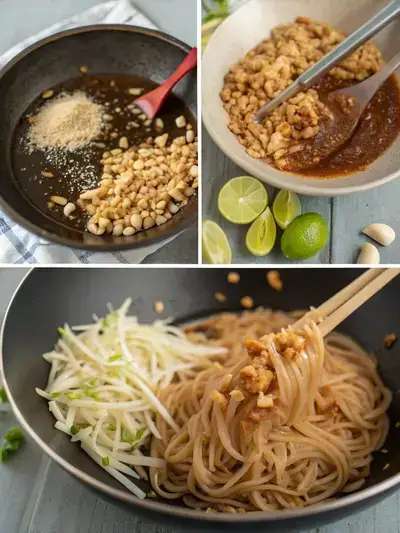
Step 1: Soak the Noodles
Start by soaking the rice noodles in warm water until they become pliable. This usually takes about 20-30 minutes. Make sure they’re not too soft!
Step 2: Make the Sauce
In a bowl, whisk together tamarind paste, fish sauce, and palm sugar. This will be the flavorful sauce that brings your Pad Thai to life!
Step 3: Sauté Aromatics
Heat some oil in a wok over medium heat. Add minced garlic and shallots, sautéing until they’re fragrant and golden. Your kitchen will smell amazing!
Step 4: Cook the Protein
Add tofu and shrimp to the wok. Cook until the shrimp turns pink and the tofu is golden. This should take about 3-4 minutes.
Step 5: Scramble the Eggs
Push the cooked ingredients to one side of the wok. Pour in beaten eggs and scramble them until just set. Mix everything together once done!
Step 6: Combine Noodles and Sauce
Add the drained noodles and the sauce to the wok. Toss everything together to coat the noodles evenly with the sauce.
Step 7: Add Fresh Ingredients
Stir in bean sprouts and sliced scallions. Give it a good toss to mix everything well. You’re almost there!
Step 8: Serve and Enjoy
Serve your Pad Thai hot, garnished with crushed peanuts and lime wedges. Dig in and enjoy your homemade Thai noodles!
Recipe Snapshot
| Feature | Details |
|---|---|
| Category | Main Course |
| Cuisine | Thai |
| Prep Time | 15 minutes |
| Cook Time | 10 minutes |
| Extra Time | 30 minutes (soaking noodles) |
| Total Time | 55 minutes |
| Dietary | Vegetarian option available |
| Serves | 2 |
| Best Served | Hot with lime wedges |
Pro Tips for Making pad thai
- Soak rice noodles in warm water for 30 minutes for the perfect texture.
- Use tamarind paste for an authentic tangy flavor.
- Prep all ingredients before cooking to streamline the process.
- Don’t overcrowd the pan; cook in batches for even frying.
- Top with crushed peanuts and fresh lime for a delightful finish.
How to Serve this pad thai
- Garnish with fresh lime wedges for a zesty kick.
- Top with crushed peanuts for added crunch.
- Serve alongside a refreshing cucumber salad.
- Pair with a light coconut milk soup for a complete meal.
- Enjoy with a side of spring rolls for extra flavor.
- Offer sriracha or chili flakes for those who love heat.
Make Ahead and Storage
Storing and enjoying your Pad Thai later is easy and convenient:
Storing Pad Thai Leftovers
- Allow Pad Thai to cool to room temperature.
- Transfer to an airtight container.
- Store in the refrigerator for up to 3 days.
- Label the container with the date for easy tracking.
Freezing Pad Thai
- Cool the dish completely before freezing.
- Portion into freezer-safe bags or containers.
- Remove excess air to prevent freezer burn.
- Freeze for up to 2 months for best quality.
Reheating Pad Thai
- Thaw in the refrigerator overnight if frozen.
- Reheat in a skillet over medium heat with a splash of water.
- Stir frequently to ensure even heating.
- For microwave, heat in short intervals, stirring in between.
Explore more easy breakfast recipes, quick lunch ideas, cozy dinner meals, tasty snacks, and delightful dessert.
FAQs
Here’s a helpful FAQ about this recipe:
1. What does pad thai consist of?
Pad Thai is a delicious stir-fried noodle dish that typically consists of rice noodles, eggs, a protein such as chicken, shrimp, or tofu, and a variety of vegetables like bean sprouts and green onions. It’s flavored with a tangy sauce made from tamarind paste, fish sauce, and sugar, and is often garnished with crushed peanuts and lime wedges for added flavor.
2. Why is pad thai so healthy?
Pad Thai can be a healthy meal option because it includes a balance of carbohydrates from the rice noodles, protein from the eggs and your choice of meat or tofu, and plenty of vegetables. Additionally, it can be made with less oil and sugar to suit your dietary preferences, making it a nutritious choice that’s packed with flavor and essential nutrients.
3. What is the difference between pad thai and lo mein?
The main difference between Pad Thai and lo mein lies in the type of noodles and the cooking method. Pad Thai uses flat rice noodles and is stir-fried with a unique sauce that includes tamarind, while lo mein uses wheat noodles and is typically tossed with a soy sauce-based mixture. The flavors and textures of the two dishes are quite distinct, making each a unique culinary experience.
4. What is the crunchy stuff in pad thai?
The crunchy topping in Pad Thai usually consists of crushed peanuts, which add a delightful texture and nutty flavor to the dish. Sometimes, you may also find crispy bean sprouts or fried shallots sprinkled on top, enhancing the overall taste and providing that satisfying crunch with every bite.
Final Thoughts
Now that you have this easy and authentic Pad Thai recipe, it’s time to bring a taste of Thailand to your kitchen! Enjoy the delightful flavors and the satisfaction of creating something delicious from scratch. Gather your loved ones, share a plate, and savor every bite. Happy cooking!