

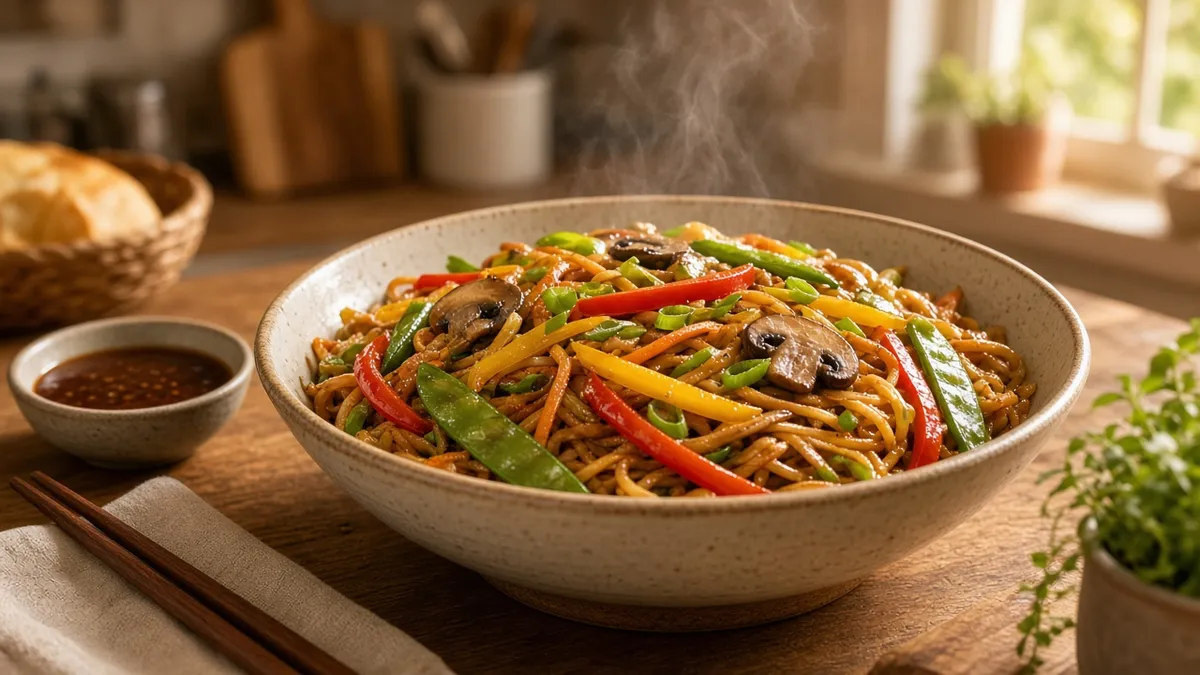
Recipe card
Print / PDFHomemade Lo Mein Noodles
Rate this recipe
Be the first to rate
- Prep Time
- 20 mins
- Cook Time
- 15 mins
- Total Time
- 35 mins
Ingredients
- 12 ounces dried lo mein noodles or spaghetti
- 2 tablespoons vegetable oil, divided
- 3 cloves garlic, minced
- 1 tablespoon grated fresh ginger
- 1 medium carrot, cut into matchsticks
- 1 red bell pepper, thinly sliced
- 2 cups shredded green cabbage
- 4 green onions, sliced
- 1 cup broccoli florets
- 1/4 cup low-sodium soy sauce
- 2 tablespoons oyster sauce
- 1 tablespoon toasted sesame oil
- 1 tablespoon honey
- 1/4 teaspoon ground black pepper
- 1/4 cup reserved noodle water
Equipment
- large pot — For boiling the noodles
- large skillet or wok — A wide pan helps the vegetables cook evenly
- small mixing bowl — For whisking the sauce
- colander — For draining and rinsing the noodles
- tongs — For tossing the noodles and vegetables
Method
- 1
Bring a large pot of salted water to a boil.
- 2
Cook the noodles according to the package directions.
- 3
Reserve 1/4 cup of the noodle water.
- 4
Drain the noodles and rinse them briefly with cool water.
- 5
Whisk the soy sauce, oyster sauce, sesame oil, honey, pepper, and reserved noodle water in a small bowl.
- 6
Heat 1 tablespoon of vegetable oil in a large skillet or wok over medium-high heat.
- 7
Cook the garlic and ginger for 30 seconds.
- 8
Stir-fry the carrot, bell pepper, cabbage, broccoli, and green onions for 4 minutes.
- 9
Add the remaining vegetable oil and cooked noodles to the skillet.
- 10
Pour the sauce over the noodles and toss until everything is hot and evenly coated.
Notes
| Nutrient | Amount per Serving |
|---|---|
| Calories | 450 |
| Fat | 15g |
| Protein | 13g |
| Carbs | 68g |
Why You'll Love This Lo Mein Noodles
- These lo mein noodles bring tender noodles, colorful vegetables, and savory sauce together in one skillet.
- The quick 35-minute recipe is just right for a cheerful weeknight dinner.
- Fresh garlic and ginger add warm, fragrant flavor without making the dish complicated.
- You can use dried lo mein noodles or pantry-friendly spaghetti, whichever you have on hand.
- Every bite is cozy, satisfying, and easy to share around the family table.
Ingredients
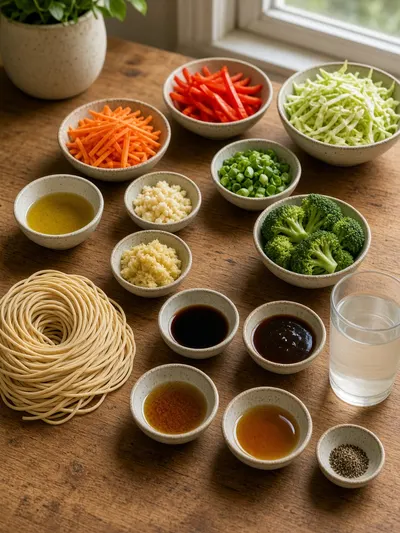
Gather these simple ingredients before you begin, and you will have everything ready for a colorful skillet of homemade lo mein noodles.
- Dried lo mein noodles or spaghetti - 12 ounces
- Vegetable oil - 2 tablespoons, divided
- Garlic - 3 cloves, minced
- Fresh ginger - 1 tablespoon, grated
- Carrot - 1 medium, cut into matchsticks
- Red bell pepper - 1, thinly sliced
- Green cabbage - 2 cups, shredded
- Green onions - 4, sliced
- Broccoli florets - 1 cup
- Low-sodium soy sauce - 1/4 cup
- Oyster sauce - 2 tablespoons
- Toasted sesame oil - 1 tablespoon
- Honey - 1 tablespoon
- Ground black pepper - 1/4 teaspoon
- Reserved noodle water - 1/4 cup
How to Make Lo Mein Noodles
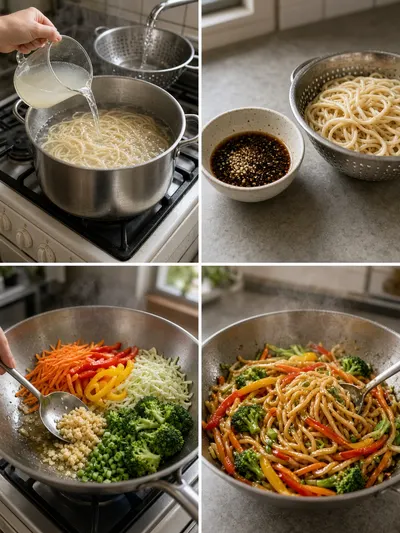
Plan for 20 minutes of prep and 15 minutes of cooking. There is no resting time, so have the vegetables sliced and the sauce mixed before the skillet gets hot.
Step 1: Boil the Water
Bring a large pot of salted water to a boil. Use a pot roomy enough for the noodles to move freely as they cook.
Step 2: Cook the Noodles
Cook the noodles according to the package directions. Stir occasionally so they cook evenly without clumping together.
Step 3: Reserve Noodle Water
Before draining, reserve 1/4 cup of the noodle water. This starchy water helps loosen the sauce and lets it coat the noodles beautifully.
Step 4: Drain and Rinse
Drain the noodles and rinse them briefly with cool water. This stops the cooking and helps keep the noodles from sticking while you stir-fry the vegetables.
Step 5: Whisk the Sauce
Whisk the soy sauce, oyster sauce, sesame oil, honey, pepper, and reserved noodle water in a small bowl. Keep the sauce close by so it is ready when the skillet is hot.
Step 6: Heat the Skillet
Heat 1 tablespoon of vegetable oil in a large skillet or wok over medium-high heat. The pan should be hot enough to cook the vegetables quickly, but not smoking.
Step 7: Cook the Aromatics
Cook the garlic and ginger for 30 seconds. Stir constantly, just until fragrant, so they do not burn.
Step 8: Stir-Fry the Vegetables
Stir-fry the carrot, bell pepper, cabbage, broccoli, and green onions for 4 minutes. Keep the vegetables moving so they become crisp-tender and retain their bright color.
Step 9: Add the Noodles
Add the remaining vegetable oil and cooked noodles to the skillet. Gently toss everything together to distribute the noodles through the vegetables.
Step 10: Toss with Sauce
Pour the sauce over the noodles and toss until everything is hot and evenly coated. Serve right away while the noodles are warm and glossy.
Recipe Snapshot
| Feature | Details |
|---|---|
| Category/Course | Dinner |
| Cuisine | Chinese-inspired |
| Prep Time | 20 minutes |
| Cook Time | 15 minutes |
| Extra Time | 0 minutes |
| Total Time | 35 minutes |
| Dietary | Dairy-free |
| Serves | 4 |
| Best Served | Warm, straight from the skillet |
Pro Tips for Making Lo Mein Noodles
- Slice all the vegetables before cooking because the stir-fry moves quickly once the skillet is hot.
- Cook the noodles just until tender according to the package directions, since they will warm again in the skillet.
- Use a large skillet or wok so the vegetables have room to sear instead of steaming.
- Adjust the sauce to taste with a small splash of reserved noodle water if the noodles need loosening.
- For a vegetarian version, use vegetarian oyster sauce in place of regular oyster sauce.
How to Serve Lo Mein Noodles
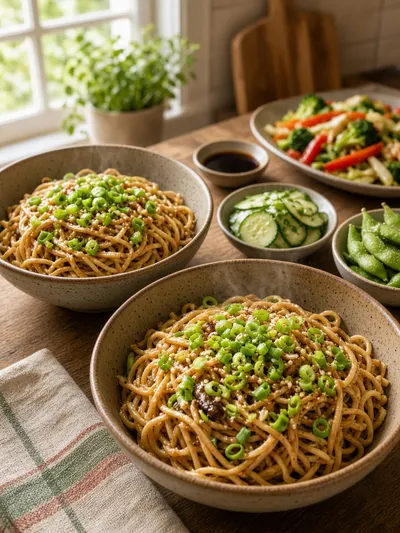
- Serve the noodles in warm bowls with extra sliced green onions scattered over the top.
- Add a simple cucumber salad or steamed edamame for a fresh side.
- Pair the skillet with extra stir-fried vegetables for a colorful family-style meal.
- Offer a little extra soy sauce at the table for anyone who enjoys a bolder savory flavor.
Make Ahead and Storage
Storing Leftovers
- Let the noodles cool briefly, then place them in a covered container and refrigerate within 2 hours.
- Store leftovers in the refrigerator for up to 3 to 4 days.
- Keep the noodles chilled at 40 F or below, and discard them if they develop an unusual smell or appearance.
Freezing
- Freeze cooled noodles in a freezer-safe container for up to 2 months.
- For the best texture, press out extra air and portion the noodles before freezing.
- Thaw overnight in the refrigerator before reheating.
Reheating
- Reheat a portion in a skillet over medium heat with a splash of water, tossing until hot throughout.
- You can also microwave the noodles in a covered microwave-safe dish, stirring halfway through.
- Reheat only the amount you plan to eat, and make sure the noodles are steaming hot before serving.
Explore more easy breakfast recipes, quick lunch ideas, cozy dinner meals, tasty snacks, and delightful dessert.
Final Thoughts
These homemade lo mein noodles are a warm, colorful, and comforting dinner that brings a little Grandma kitchen magic to any busy evening.
FAQs
Here are a few helpful answers for making this easy noodle dinner turn out just right.
Can I use spaghetti instead of lo mein noodles?
Yes. Spaghetti works well when dried lo mein noodles are not available. Cook it according to the package directions, then continue with the recipe.
Can I add other vegetables?
Absolutely. Snow peas, sliced mushrooms, baby corn, or thinly sliced zucchini can be added, as long as the pieces are cut small enough to cook quickly.
How can I keep the noodles from sticking?
Rinse the drained noodles briefly with cool water, use the reserved noodle water in the sauce, and toss the noodles promptly once they are added to the skillet.
Can I make these lo mein noodles vegetarian?
Yes. Replace the regular oyster sauce with vegetarian oyster sauce, and check the labels of your other ingredients if needed.
Kitchen notes
Nutrition & sources
Calorie and nutrition figures on this page are estimates meant for general home-cooking guidance. Actual values vary with brands, portion size, and how the recipe is prepared.
Estimates draw on typical ingredient data from public nutrition databases such as the USDA FoodData Central. They are not a substitute for professional medical or dietary advice.
For how recipes are tested and when pages are updated, see How we test recipes. Full legal context lives in our disclaimers and affiliate disclosure.


Comments
Made this recipe? Share how it turned out for your family.
No comments yet — be the first to leave a note.