

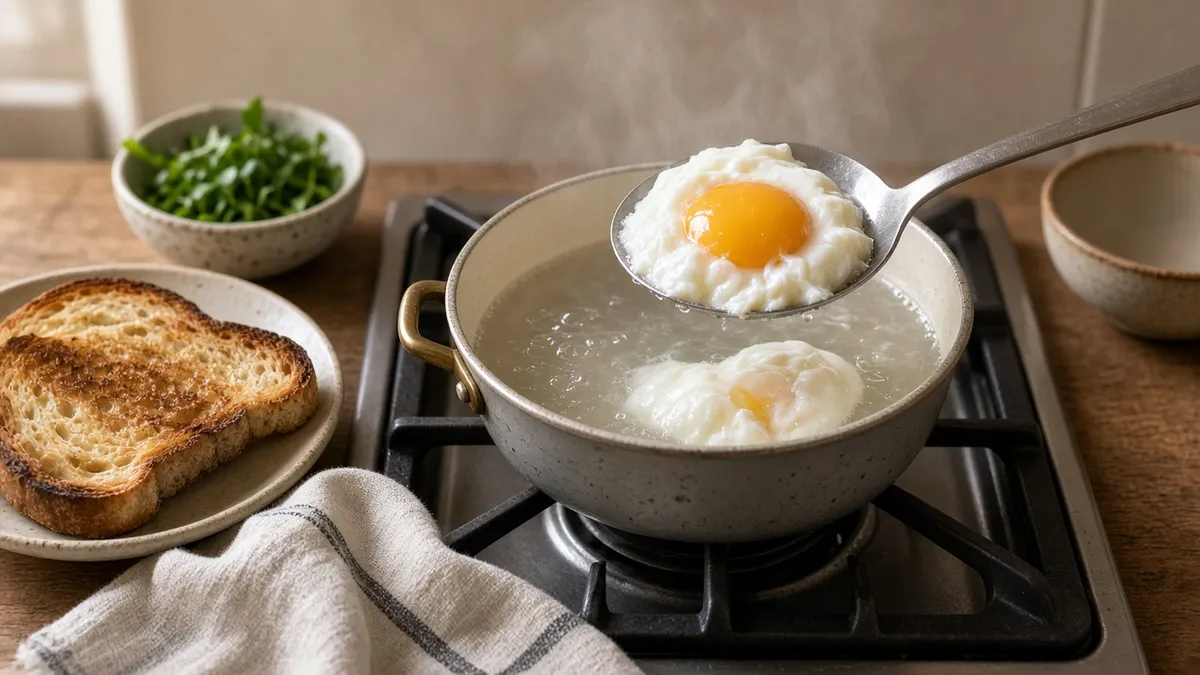
Recipe card
Print / PDFHow to Poach an Egg
Rate this recipe
Be the first to rate
- Prep Time
- 5 mins
- Cook Time
- 4 mins
- Total Time
- 9 mins
Ingredients
- 1 large fresh egg
- 4 cups water
- 1 teaspoon white vinegar
- 1/4 teaspoon salt
- Ground black pepper, to taste
- 1 slice buttered toast, optional for serving
Equipment
- Medium saucepan — A 2-quart pan gives the egg room to cook gently.
- Small bowl — Use it to hold the egg before adding it to the water.
- Slotted spoon — Helps lift the egg while leaving the water behind.
- Paper towel — Use it to drain excess water before serving.
Method
- 1
Fill a medium saucepan with the water.
- 2
Add the vinegar to the water.
- 3
Bring the water to a gentle simmer over medium heat.
- 4
Crack the egg into a small bowl.
- 5
Stir the simmering water in one direction with a spoon.
- 6
Slide the egg into the center of the water.
- 7
Cook the egg for 3 to 4 minutes.
- 8
Lift the egg from the water with a slotted spoon.
- 9
Drain the egg briefly on a paper towel.
- 10
Season the egg with salt and pepper.
- 11
Serve the poached egg over buttered toast, if desired.
Kitchen pick
As an Amazon Associate I earn from qualifying purchases. If you buy through these links, we may earn a small commission at no extra cost to you. Affiliate disclosure
Notes
| Nutrient | Amount per Serving |
|---|---|
| Calories | 70 |
| Fat | 5g |
| Protein | 6g |
| Carbs | 0g |
Why You'll Love This How To Poach An Egg
- It makes a simple egg feel special, with tender whites and a lovely golden center.
- The method uses everyday ingredients and takes just 9 minutes from start to finish.
- A gentle simmer keeps the egg delicate instead of rough or rubbery.
- It is delicious over buttered toast, breakfast bowls, or a cozy weekend plate.
- You can easily adjust the yolk from softly runny to more set with an extra minute of cooking.
Ingredients
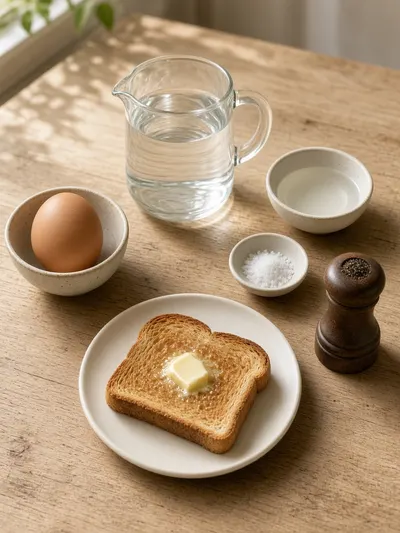
Gather these simple kitchen staples before you begin, and keep a small bowl and slotted spoon close at hand.
- Large fresh egg - 1 egg
- Water - 4 cups
- White vinegar - 1 teaspoon
- Salt - 1/4 teaspoon
- Ground black pepper - to taste
- Buttered toast - 1 slice, optional for serving
How to Make How To Poach An Egg
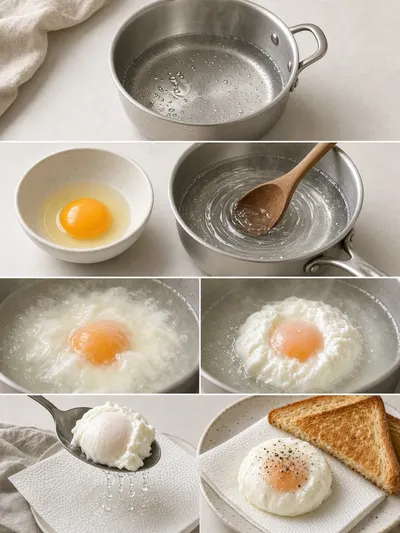
Plan on 5 minutes of prep and about 4 minutes of cooking. There is no resting time, so have your toast ready while the egg cooks.
Step 1: Fill the Saucepan
Pour the water into a medium saucepan. Leave enough room for the egg to move gently without crowding the pan.
Step 2: Add the Vinegar
Add the vinegar to the water. It helps the egg white set neatly as it cooks.
Step 3: Bring Water to a Simmer
Set the saucepan over medium heat and bring the water to a gentle simmer. Look for small bubbles around the edges and across the bottom, not a rolling boil.
Step 4: Crack the Egg
Crack the egg into a small bowl. This makes it easier to slide the egg into the water smoothly and helps prevent shell pieces from falling into the pan.
Step 5: Stir the Water
Use a spoon to stir the simmering water in one direction. A gentle swirl helps the egg white gather around the yolk.
Step 6: Slide in the Egg
Carefully slide the egg into the center of the swirling water. Lower the bowl close to the surface so the egg does not drop and break apart.
Step 7: Cook the Egg
Cook the egg for 3 to 4 minutes. The white should be set while the yolk remains soft and golden.
Step 8: Lift the Egg
Use a slotted spoon to lift the egg from the water. Hold it over the pan for a moment so excess water can drain away.
Step 9: Drain Briefly
Place the egg on a paper towel for a few seconds. This keeps extra water from soaking your toast.
Step 10: Season the Egg
Season the poached egg with salt and ground black pepper. Add just enough to let the delicate egg flavor shine.
Step 11: Serve Warm
Serve the poached egg over buttered toast, if desired. It is best enjoyed right away while the yolk is warm and silky.
Recipe Snapshot
| Feature | Details |
|---|---|
| Category/Course | Breakfast |
| Cuisine | American |
| Prep Time | 5 minutes |
| Cook Time | 4 minutes |
| Extra Time | 0 minutes |
| Total Time | 9 minutes |
| Dietary | Vegetarian |
| Serves | 1 |
| Best Served | Warm over buttered toast |
Pro Tips for Making How To Poach An Egg
A stovetop poacher with four cups for neat, consistent poached eggs. View on Amazon
- Use the freshest egg you can find because fresher whites hold together better in the water.
- Keep the water at a gentle simmer. Boiling water can break up the egg white.
- Crack the egg into a bowl first instead of directly into the saucepan.
- For a firmer yolk, cook the egg for the full 4 minutes or a little longer.
- Have your toast and seasonings ready before cooking so you can serve the egg immediately.
How to Serve How To Poach An Egg
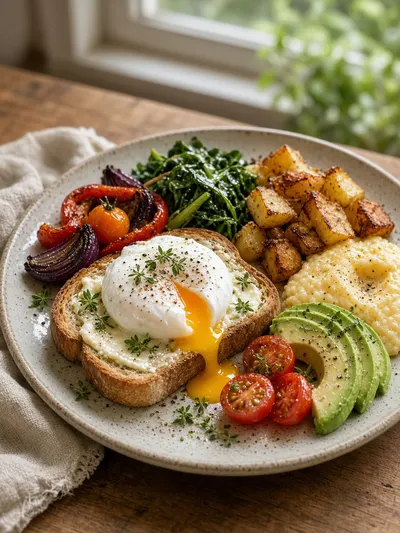
- Set it over buttered toast for a classic, comforting breakfast.
- Add it to a bowl of warm greens, roasted vegetables, or breakfast potatoes.
- Serve it with sliced avocado and tomatoes for a fresh morning plate.
- Place it over oatmeal or savory grits for extra richness.
- Finish with a sprinkle of black pepper and fresh herbs if you have them on hand.
Make Ahead and Storage
Storing Leftovers
- Poached eggs are best served fresh, but leftovers can be covered and refrigerated within 2 hours.
- Use refrigerated leftovers within 1 day for the best texture and flavor.
- Keep the egg separate from toast so the bread does not become soggy.
Freezing
- Freezing is not recommended because the cooked white can become tough and watery after thawing.
- For the freshest result, poach a new egg when you are ready to eat.
Reheating
- Warm a leftover poached egg in hot, not boiling, water for about 1 minute.
- Lift it out with a slotted spoon and drain briefly on a paper towel before serving.
- Check that the egg is heated through before eating.
Explore more easy breakfast recipes, quick lunch ideas, cozy dinner meals, tasty snacks, and delightful dessert.
Final Thoughts
Once you know how to poach an egg, a quiet morning breakfast feels wonderfully easy and comforting.
FAQs
Here are a few helpful answers for making a tender poached egg at home.
How fresh should an egg be for poaching?
Use the freshest egg available because the white will stay together more neatly in the simmering water.
Why do you add vinegar to the poaching water?
Vinegar helps the egg white set more quickly, which can create a tidier poached egg without making it taste strongly of vinegar.
How do you know when a poached egg is done?
The white should look fully set, while the yolk should still feel soft when cooked for 3 to 4 minutes.
Can I poach more than one egg at a time?
Yes, but use a wider saucepan and give each egg plenty of room. Cook them in batches if the pan feels crowded so the eggs do not stick together.
Kitchen notes
Nutrition & sources
Calorie and nutrition figures on this page are estimates meant for general home-cooking guidance. Actual values vary with brands, portion size, and how the recipe is prepared.
Estimates draw on typical ingredient data from public nutrition databases such as the USDA FoodData Central. They are not a substitute for professional medical or dietary advice.
For how recipes are tested and when pages are updated, see How we test recipes. Full legal context lives in our disclaimers and affiliate disclosure.


Comments
Made this recipe? Share how it turned out for your family.
No comments yet — be the first to leave a note.