

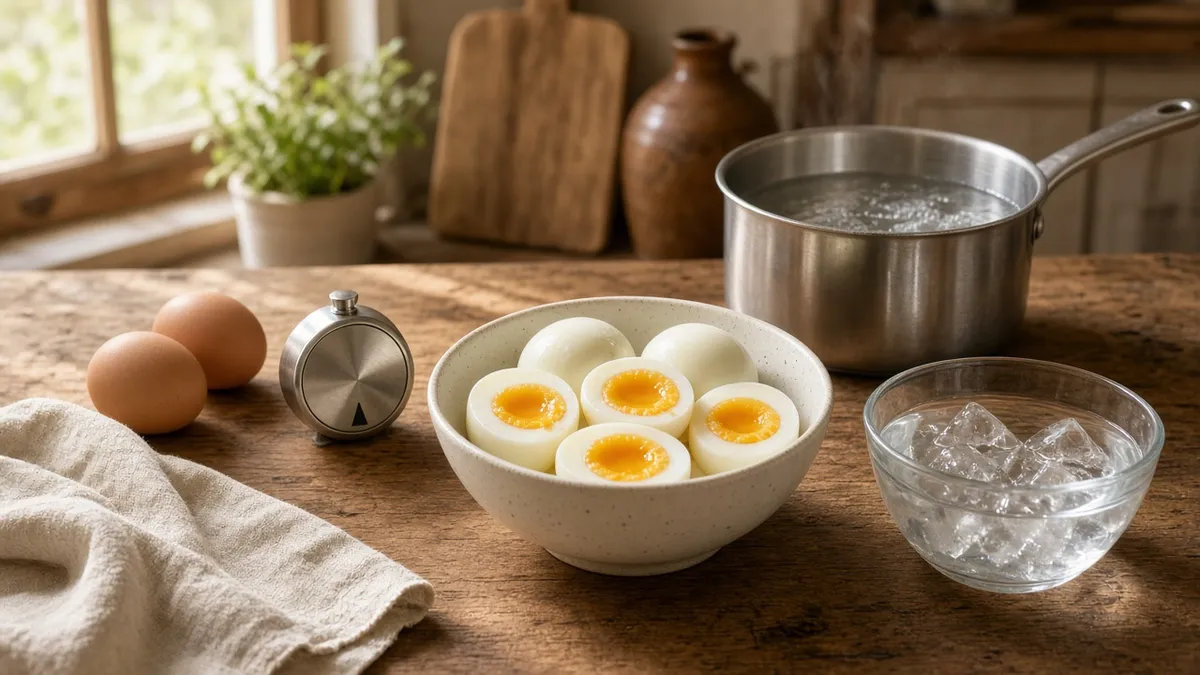
Recipe card
Print / PDFHow to Medium Boil Eggs
Rate this recipe
Be the first to rate
- Prep Time
- 5 mins
- Cook Time
- 7 mins
- Extra Time
- 5 mins
- Total Time
- 17 mins
Ingredients
- 6 large eggs
- 6 cups water, or enough to cover the eggs by 1 inch
- 2 cups ice
- 4 cups cold water
Equipment
- Medium saucepan — Use one large enough to hold the eggs in a single layer.
- Slotted spoon — Helpful for lowering and lifting the eggs gently.
- Large bowl — Use for the ice bath.
- Kitchen timer — Keeps the centers softly set and golden.
Method
- 1
Place the eggs in a single layer in a saucepan.
- 2
Cover the eggs with 6 cups of water.
- 3
Bring the water to a full boil over medium-high heat.
- 4
Lower the eggs gently into the boiling water with a slotted spoon.
- 5
Boil the eggs for 7 minutes.
- 6
Fill a large bowl with the ice and cold water.
- 7
Transfer the cooked eggs to the ice bath.
- 8
Chill the eggs for 5 minutes.
- 9
Tap each egg gently against the counter to crack the shell.
- 10
Peel the eggs under cool running water.
Notes
| Nutrient | Amount per Serving |
|---|---|
| Calories | 70 |
| Fat | 5g |
| Protein | 6g |
| Carbs | 1g |
Why You'll Love This How To Medium Boil Eggs
- Soft, golden centers make these eggs just right for breakfast or snacking.
- A simple timer helps you get dependable results every time.
- The ice bath cools the eggs quickly and makes peeling easier.
- Boiled eggs are easy to prepare ahead for busy mornings.
- With just eggs, water, ice, and a little patience, this recipe keeps things wonderfully simple.
Ingredients
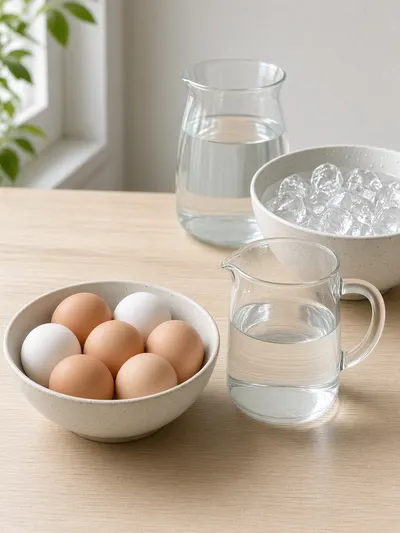
Gather a few humble ingredients, and you will have a batch of tender medium boiled eggs ready for the refrigerator.
- Large eggs - 6
- Water - 6 cups, or enough to cover the eggs by 1 inch
- Ice - 2 cups
- Cold water - 4 cups
How to Make How To Medium Boil Eggs
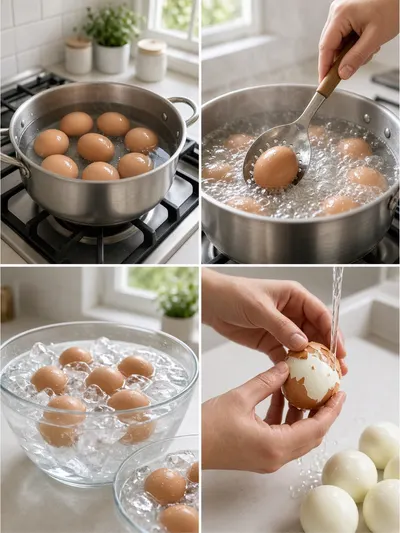
Plan on 5 minutes of prep, 7 minutes of cooking, and 5 minutes of chilling time in the ice bath. The gentle routine is easy to follow and gives the centers their lovely, softly set texture.
Step 1: Arrange the Eggs
Place the eggs in a single layer in a saucepan. Keeping them in one layer helps them cook evenly and prevents them from bumping into one another too much.
Step 2: Add the Water
Cover the eggs with 6 cups of water. Make sure the water rises about 1 inch above the eggs so they remain covered as it heats.
Step 3: Bring to a Boil
Bring the water to a full boil over medium-high heat. Watch the pot so the water reaches a steady, active boil before moving to the next step.
Step 4: Lower the Eggs
Lower the eggs gently into the boiling water with a slotted spoon. This careful step helps keep the shells from cracking when they enter the hot water.
Step 5: Boil for Seven Minutes
Boil the eggs for 7 minutes. Keep the water at a steady boil and use a timer for the most reliable results.
Step 6: Prepare the Ice Bath
Fill a large bowl with the ice and cold water. Have it ready before the cooking time ends so the eggs can cool right away.
Step 7: Transfer the Eggs
Transfer the cooked eggs to the ice bath with a slotted spoon. The cold water stops the cooking process and helps protect the softly set centers.
Step 8: Chill for Five Minutes
Chill the eggs for 5 minutes. Keep them surrounded by the ice water so they cool evenly throughout.
Step 9: Crack the Shells
Tap each egg gently against the counter to crack the shell. Small, light taps are better than one hard hit and help loosen the shell without damaging the egg.
Step 10: Peel Under Water
Peel the eggs under cool running water. Let the water slip beneath the shell and membrane to help lift them away cleanly.
Recipe Snapshot
| Feature | Details |
|---|---|
| Category/Course | Breakfast |
| Cuisine | American |
| Prep Time | 5 minutes |
| Cook Time | 7 minutes |
| Extra Time | 5 minutes chilling |
| Total Time | 17 minutes |
| Dietary | Vegetarian, naturally gluten-free |
| Serves | 6 |
| Best Served | Chilled, sliced, or enjoyed whole |
Pro Tips for Making How To Medium Boil Eggs
- Use eggs in a single layer so the heat can circulate around each one.
- Set the timer as soon as the eggs are lowered into the boiling water.
- Do not skip the ice bath, since it stops cooking and makes peeling easier.
- Peel the eggs under cool running water for help with stubborn bits of shell.
- If your eggs are especially fresh, allow a little extra care when peeling because fresh whites can cling more tightly to the shell.
How to Serve How To Medium Boil Eggs
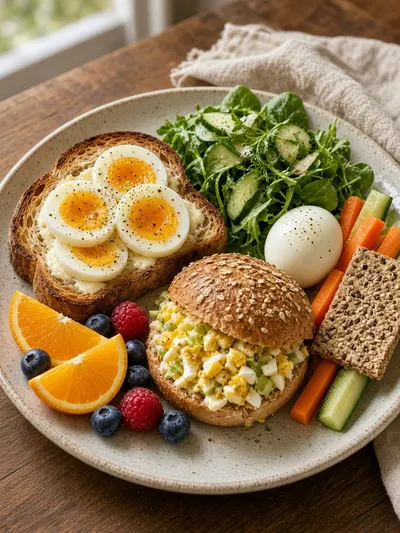
- Slice the eggs over buttered toast with a sprinkle of salt and pepper.
- Add them to a leafy green salad for a simple, satisfying lunch.
- Serve them alongside fresh fruit and toast for an easy breakfast plate.
- Chop them into a sandwich filling with mayonnaise, mustard, and a little celery.
- Pack a peeled egg with crackers and vegetables for a wholesome snack.
Make Ahead and Storage
Storing Leftovers
- Store peeled or unpeeled eggs in a covered container in the refrigerator.
- Use refrigerated boiled eggs within 1 week for the best quality.
- Label the container with the date so you can keep track of freshness.
Freezing
- Freezing whole boiled eggs is not recommended because the whites can become rubbery and watery.
- If needed, the cooked yolks may be frozen separately, though their texture can change slightly.
Reheating
- These eggs are best served cold or at room temperature.
- To gently warm a peeled egg, place it in hot water for a few minutes, then check the temperature before serving.
- Do not microwave a whole egg in its shell, as pressure can build and cause it to burst.
Explore more easy breakfast recipes, quick lunch ideas, cozy dinner meals, tasty snacks, and delightful dessert.
Final Thoughts
Once you know how to medium boil eggs, a dependable breakfast staple is always close at hand, just like Grandma liked it.
FAQs
Here are a few helpful answers for making tender, softly set boiled eggs at home.
What does medium boiled mean?
A medium boiled egg has fully set whites and a yolk that is softly set in the center, with a tender golden texture.
How long should I boil eggs for a medium center?
Boil the eggs for 7 minutes after lowering them into actively boiling water, then chill them in an ice bath.
Why do my boiled eggs crack?
Cracks can happen when cold eggs meet very hot water or when eggs bump against the pan. Lower them gently with a slotted spoon to help prevent cracking.
How can I peel boiled eggs more easily?
Chill the cooked eggs in an ice bath for 5 minutes, then crack the shell gently and peel under cool running water.
Kitchen notes
Nutrition & sources
Calorie and nutrition figures on this page are estimates meant for general home-cooking guidance. Actual values vary with brands, portion size, and how the recipe is prepared.
Estimates draw on typical ingredient data from public nutrition databases such as the USDA FoodData Central. They are not a substitute for professional medical or dietary advice.
For how recipes are tested and when pages are updated, see How we test recipes. Full legal context lives in our disclaimers and affiliate disclosure.


Comments
Made this recipe? Share how it turned out for your family.
No comments yet — be the first to leave a note.