

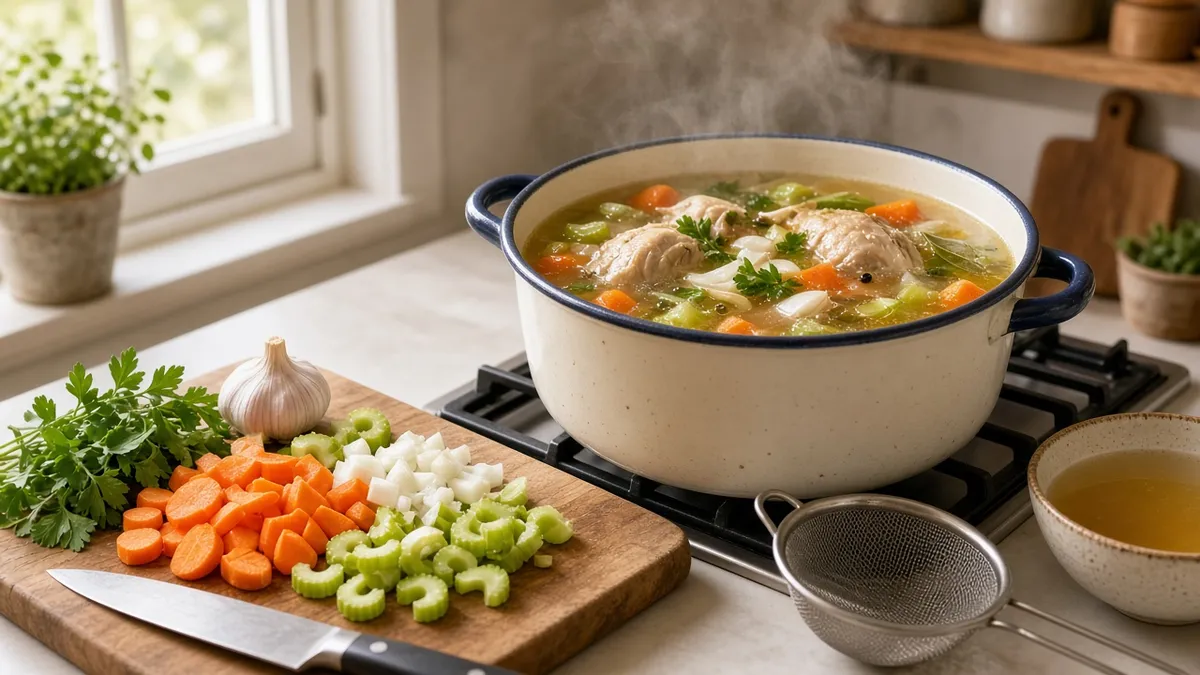
Recipe card
Print / PDFHow to Make Soup Stock
Rate this recipe
Be the first to rate
- Prep Time
- 20 mins
- Cook Time
- 3 hrs
- Total Time
- 3 hrs 20 mins
Ingredients
- 3 pounds chicken bones or leftover roasted chicken bones
- 2 medium carrots, roughly chopped
- 2 celery stalks, roughly chopped
- 1 large yellow onion, quartered
- 3 garlic cloves, crushed
- 2 bay leaves
- 6 whole black peppercorns
- 10 cups cold water
- 2 fresh parsley sprigs
- 1 teaspoon kosher salt, optional
Equipment
- large stockpot — Use an 8-quart pot or larger.
- fine-mesh sieve — For straining the clear stock.
- large heatproof bowl — Place it beneath the sieve.
- large spoon — Useful for skimming foam.
- shallow storage containers — They help the stock cool promptly.
Method
- 1
Place the chicken bones in a large stockpot.
- 2
Add the carrots, celery, onion, garlic, bay leaves, peppercorns, and parsley.
- 3
Pour the cold water into the pot.
- 4
Bring the stock to a gentle boil over medium-high heat.
- 5
Reduce the heat to low.
- 6
Skim the foam from the surface with a spoon.
- 7
Simmer the stock uncovered for 3 hours.
- 8
Strain the stock through a fine-mesh sieve into a large bowl.
- 9
Cool the stock in shallow containers.
- 10
Refrigerate the stock within 2 hours.
- 11
Remove the solidified fat from the chilled stock before using.
Notes
| Nutrient | Amount per Serving |
|---|---|
| Calories | 45 |
| Fat | 2g |
| Protein | 6g |
| Carbs | 2g |
Why You'll Love This How To Make Soup Stock
- It turns simple chicken bones and vegetables into a deeply savory homemade base.
- The gentle simmer fills your kitchen with the comforting aroma of Grandma's cooking.
- It is a practical way to make good use of leftover roasted chicken bones.
- Homemade stock adds rich flavor to soups, sauces, rice, and stews.
- You can make it ahead and keep portions ready for easy family meals.
Ingredients
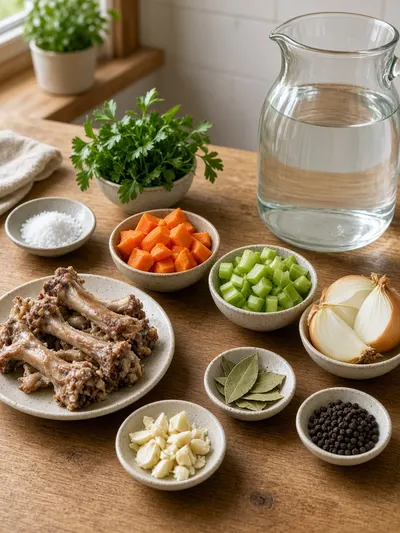
Gather a few humble ingredients, and you will have everything needed for a flavorful, comforting stock.
- Chicken bones - 3 pounds, or leftover roasted chicken bones
- Carrots - 2 medium, roughly chopped
- Celery - 2 stalks, roughly chopped
- Yellow onion - 1 large, quartered
- Garlic cloves - 3, crushed
- Bay leaves - 2
- Whole black peppercorns - 6
- Cold water - 10 cups
- Fresh parsley sprigs - 2
- Kosher salt - 1 teaspoon, optional
How to Make How To Make Soup Stock
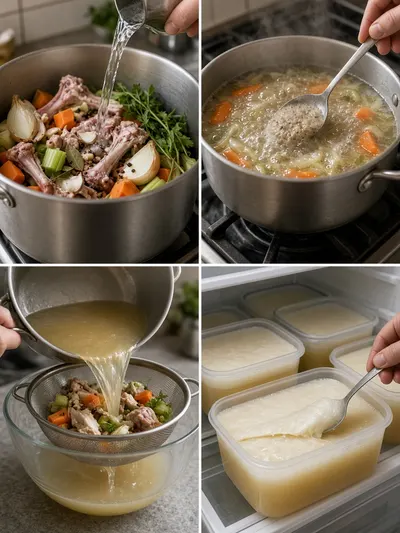
Set aside 20 minutes for preparation, then let the stock gently simmer for 3 hours. After straining, allow it to cool in shallow containers before refrigerating.
Step 1: Add the Chicken Bones
Place the chicken bones in a large stockpot. Use a pot with plenty of room for the bones, vegetables, and water to simmer comfortably.
Step 2: Add the Vegetables and Herbs
Add the carrots, celery, onion, garlic, bay leaves, peppercorns, and parsley to the pot. The rough cuts are just right for stock since everything will be strained later.
Step 3: Pour in the Water
Pour the cold water into the pot, making sure the bones and vegetables are covered. Cold water helps draw flavor from the ingredients as the stock heats.
Step 4: Bring to a Gentle Boil
Bring the stock to a gentle boil over medium-high heat. Watch the pot closely so the liquid does not boil too vigorously.
Step 5: Lower the Heat
Reduce the heat to low once the stock reaches a gentle boil. The surface should show a quiet simmer rather than a rolling boil.
Step 6: Skim the Foam
Skim the foam from the surface with a spoon. Removing it helps keep the finished stock cleaner and more polished.
Step 7: Simmer the Stock
Simmer the stock uncovered for 3 hours. Keep the heat low and check occasionally, adding a little water only if needed to keep the ingredients mostly covered.
Step 8: Strain the Stock
Strain the stock through a fine-mesh sieve into a large bowl. Work carefully, since the stock and solids will be very hot.
Step 9: Cool in Shallow Containers
Cool the stock in shallow containers to help it lose heat more quickly. Divide it among containers rather than leaving a large, deep pot to cool.
Step 10: Refrigerate Promptly
Refrigerate the stock within 2 hours. Keep the containers covered once the stock has cooled sufficiently for refrigeration.
Step 11: Remove the Chilled Fat
Remove the solidified fat from the chilled stock before using. It will collect on the surface and lift away easily with a spoon.
Recipe Snapshot
| Feature | Details |
|---|---|
| Category/Course | Dinner, soup base |
| Cuisine | American |
| Prep Time | 20 minutes |
| Cook Time | 3 hours |
| Extra Time | 0 minutes |
| Total Time | 3 hours 20 minutes |
| Dietary | Gluten-free and dairy-free |
| Serves | 8 cups |
| Best Served | In soups, sauces, rice, and cozy stews |
Pro Tips for Making How To Make Soup Stock
- Use roasted chicken bones when possible for an especially deep, savory flavor.
- Keep the simmer gentle, since a hard boil can make the stock cloudy.
- Leave the pot uncovered so excess water can evaporate and the flavor can concentrate.
- Do not rush the cooling step, and use shallow containers to help the stock cool safely.
- Salt lightly or leave it unsalted so you can adjust the seasoning when using the stock in another recipe.
How to Serve How To Make Soup Stock
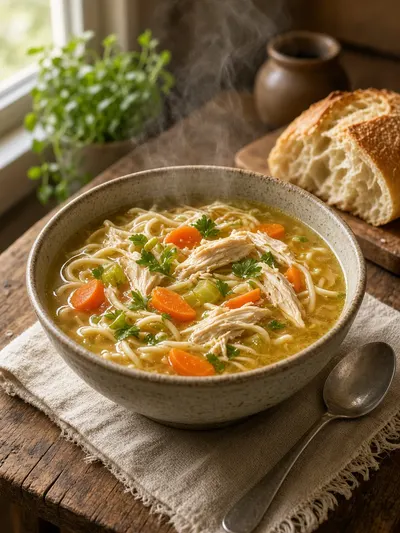
- Use it as the flavorful base for chicken noodle soup or vegetable soup.
- Simmer rice, barley, or other grains in stock instead of water.
- Add it to pan sauces and gravies for a warm, savory finish.
- Use it to loosen stews or brighten leftovers with extra moisture and flavor.
Make Ahead and Storage
Storing Leftovers
- Store cooled stock in covered containers in the refrigerator.
- Use refrigerated stock within 3 to 4 days for the best quality.
- Remove the solidified fat from the surface before reheating or using.
Freezing
- Freeze stock in freezer-safe containers, leaving room for expansion.
- Freeze in small portions or ice cube trays for convenient use in sauces and pan dishes.
- Label each container with the date and amount before freezing.
Reheating
- Thaw frozen stock in the refrigerator or gently warm it in a saucepan.
- Heat until steaming hot before adding it to soups, sauces, rice, or stews.
- Stir the stock as it warms and adjust the seasoning in the finished dish.
Explore more easy breakfast recipes, quick lunch ideas, cozy dinner meals, tasty snacks, and delightful dessert.
Final Thoughts
A pot of homemade stock is one of those simple kitchen comforts that rewards a little patience with rich, nourishing flavor.
FAQs
Here are a few helpful answers for making and storing your homemade chicken stock.
Can I use leftover roasted chicken bones?
Yes. Leftover roasted chicken bones are wonderful for stock and often add extra depth of flavor.
Why should the stock simmer instead of boil?
A gentle simmer helps draw out flavor while keeping the stock clearer and more delicate.
How do I know when the stock is ready?
The stock is ready when it has a rich savory aroma and flavor after the 3-hour simmer. It may also become lightly gelatinous when chilled.
Can I leave out the salt?
Yes. Leaving out the optional salt gives you more control when using the stock in recipes that already contain seasoning.
Kitchen notes
Nutrition & sources
Calorie and nutrition figures on this page are estimates meant for general home-cooking guidance. Actual values vary with brands, portion size, and how the recipe is prepared.
Estimates draw on typical ingredient data from public nutrition databases such as the USDA FoodData Central. They are not a substitute for professional medical or dietary advice.
For how recipes are tested and when pages are updated, see How we test recipes. Full legal context lives in our disclaimers and affiliate disclosure.


Comments
Made this recipe? Share how it turned out for your family.
No comments yet — be the first to leave a note.