

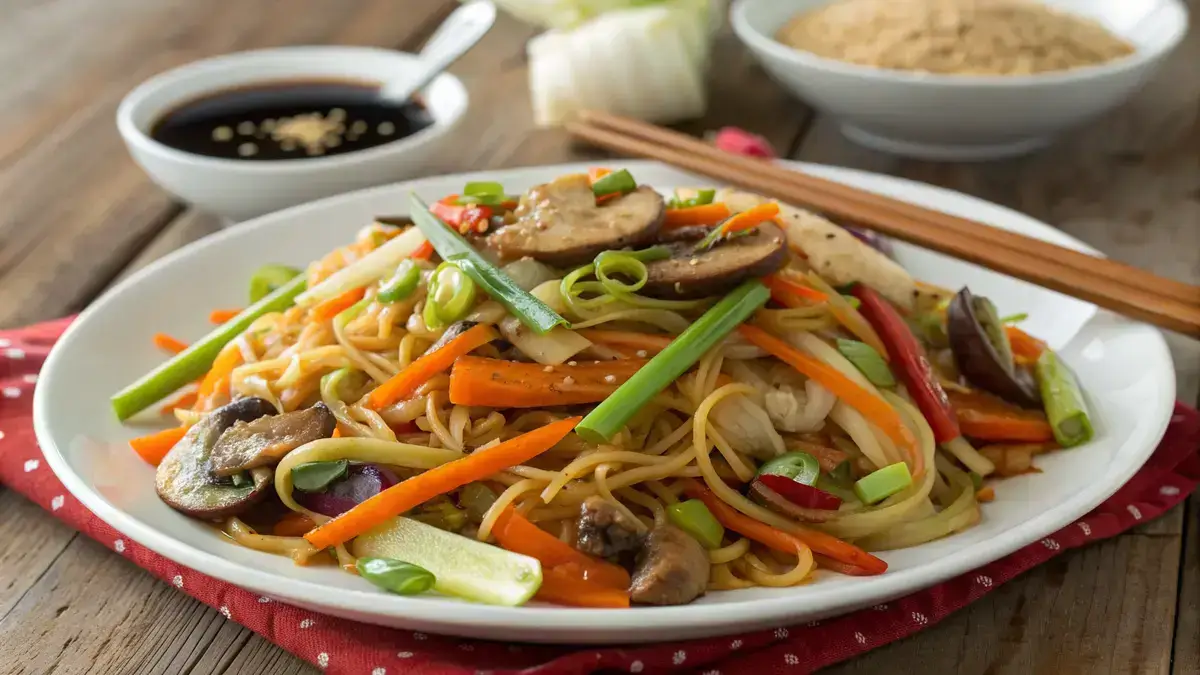
Recipe card
Print / PDFEasy Hibachi Noodles
Rate this recipe
Be the first to rate
- Prep Time
- 10 mins
- Cook Time
- 15 mins
- Total Time
- 25 mins
Ingredients
- 8 oz lo mein noodles (for the base of the dish)
- 2 tbsp vegetable oil (for frying)
- 2 tbsp butter (adds richness)
- 1 small onion (sliced, for sweetness)
- 1 cup shredded cabbage (for crunch)
- 1 small carrot (julienned, for color)
- 1/2 cup sliced mushrooms (for earthy flavor)
- 2 cloves garlic (minced, for aroma)
- 3 tbsp soy sauce (for umami)
- 1 tbsp sesame oil (for a nutty finish)
- to taste salt and pepper (to taste)
- 2 scallions (thinly sliced, for garnish)
Equipment
- 1 Large skillet or hibachi griddle — For frying the noodles and vegetables.
Method
- 1
Step 1: Cook the Noodles – Cook the noodles according to package instructions. Drain them and set aside for later.
- 2
Step 2: Heat the Skillet – Heat oil and butter in a large skillet or hibachi griddle over medium-high heat.
- 3
Step 3: Sauté Aromatics – Add garlic and onions to the skillet. Sauté for 1–2 minutes until fragrant.
- 4
Step 4: Add Vegetables – Add carrots, cabbage, and mushrooms. Stir-fry for 3–4 minutes until they are tender-crisp.
- 5
Step 5: Combine Noodles and Sauce – Push the vegetables to the side. Add the cooked noodles, drizzle with soy sauce and sesame oil, then toss everything together.
- 6
Step 6: Season and Serve – Season with salt and pepper to taste. Garnish with scallions and serve hot.
Notes
| Nutrient | Amount per Serving |
|---|---|
| Calories | 350 |
| Fat | 15g |
| Protein | 8g |
| Carbs | 45g |
Why You’ll Love This hibachi noodles
- Quick and easy to whip up for a weeknight dinner.
- Loaded with fresh veggies for a colorful, nutritious meal.
- Customizable with your favorite proteins or tofu.
- Brings the authentic taste of Japanese hibachi right to your kitchen.
- Perfect for meal prep and leftovers taste amazing!
Ingredients
Gather these fresh ingredients to whip up delicious hibachi noodles!
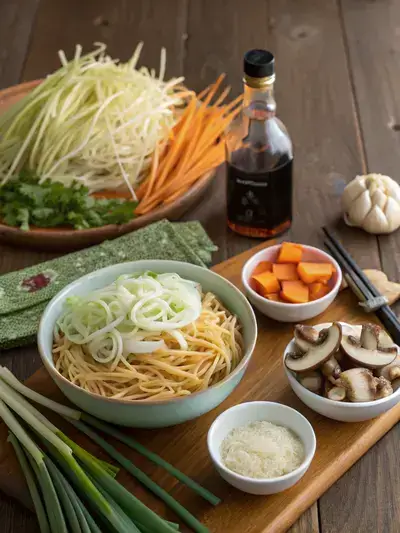
- 8 oz lo mein noodles – for the base of the dish
- 2 tbsp vegetable oil – for frying
- 2 tbsp butter – adds richness
- 1 small onion – sliced, for sweetness
- 1 cup shredded cabbage – for crunch
- 1 small carrot – julienned, for color
- 1/2 cup sliced mushrooms – for earthy flavor
- 2 cloves garlic – minced, for aroma
- 3 tbsp soy sauce – for umami
- 1 tbsp sesame oil – for a nutty finish
- salt and pepper – to taste
- 2 scallions – thinly sliced, for garnish
How to Make hibachi noodles
This delicious hibachi noodles recipe takes about 10 minutes to prepare and 15 minutes to cook. Get ready for a total time of 25 minutes to enjoy this delightful dish!
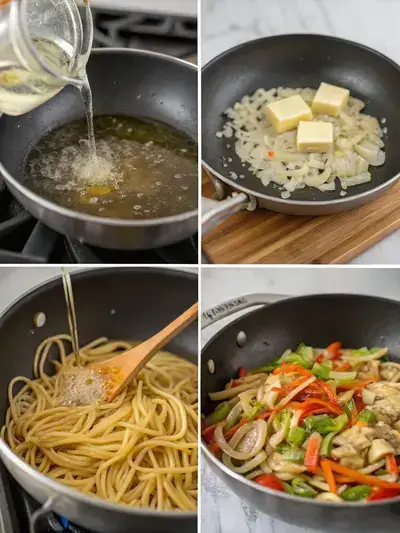
Step 1: Cook the Noodles
Cook the noodles according to package instructions. Drain them and set aside for later.
Step 2: Heat the Skillet
Heat oil and butter in a large skillet or hibachi griddle over medium-high heat.
Step 3: Sauté Aromatics
Add garlic and onions to the skillet. Sauté for 1–2 minutes until fragrant.
Step 4: Add Vegetables
Add carrots, cabbage, and mushrooms. Stir-fry for 3–4 minutes until they are tender-crisp.
Step 5: Combine Noodles and Sauce
Push the vegetables to the side. Add the cooked noodles, drizzle with soy sauce and sesame oil, then toss everything together.
Step 6: Season and Serve
Season with salt and pepper to taste. Garnish with scallions and serve hot.
Recipe Snapshot
| Feature | Details |
|---|---|
| Category | Main Course |
| Cuisine | Japanese |
| Prep Time | 10 minutes |
| Cook Time | 15 minutes |
| Extra Time | 0 minutes |
| Total Time | 25 minutes |
| Dietary | Vegetarian |
| Serves | 4 |
| Best Served | Hot and fresh |
Pro Tips for Making hibachi noodles
- Prep all ingredients before cooking for a smooth stir-fry experience.
- Use high heat to achieve that signature hibachi char and flavor.
- Experiment with different vegetables for added color and nutrition.
- Don’t overcrowd the pan; cook in batches if necessary.
- Add a splash of soy sauce at the end for an extra umami kick.
How to Serve this hibachi noodles
- Top with sliced green onions for a fresh crunch.
- Serve alongside grilled chicken or shrimp for a protein boost.
- Pair with a side of steamed vegetables for a colorful plate.
- Drizzle with soy sauce or teriyaki sauce for extra flavor.
- Garnish with sesame seeds for a nutty finish.
- Enjoy with a side of miso soup for a complete meal.
- Mix in some tofu for a vegetarian option.
- Serve in a bowl or on a plate for a casual dining experience.
Make Ahead and Storage
You can prepare and store hibachi noodles for later enjoyment:
Storing Leftovers
- Allow noodles to cool completely before storing.
- Transfer to an airtight container.
- Refrigerate for up to 3 days.
- Label with the date for easy tracking.
Freezing
- Cool noodles completely before freezing.
- Portion into freezer-safe bags or containers.
- Remove excess air to prevent freezer burn.
- Freeze for up to 2 months for best quality.
Reheating
- Thaw frozen noodles in the refrigerator overnight.
- Reheat in a skillet over medium heat with a splash of water or broth.
- Stir frequently to ensure even heating.
- Microwave in short intervals, stirring in between, if preferred.
Explore more easy breakfast recipes, quick lunch ideas, cozy dinner meals, tasty snacks, and delightful dessert.
Final Thoughts
Now that you have this easy hibachi noodles recipe in your back pocket, it’s time to get cooking! Picture the sizzling sounds and delightful aromas filling your kitchen as you whip up this delicious dish. Enjoy every bite, and remember, the joy of cooking is all about having fun and sharing good food with loved ones. Happy cooking!
Quick answers
Frequently asked questions
Straight answers from the kitchen — storage, swaps, and common sticking points for this recipe.
What kind of noodles are used for hibachi?
Are hibachi noodles the same as lo mein?
What kind of noodles do they use at Japanese steakhouses?
What are Japanese noodles called?
Kitchen notes
Nutrition & sources
Calorie and nutrition figures on this page are estimates meant for general home-cooking guidance. Actual values vary with brands, portion size, and how the recipe is prepared.
Estimates draw on typical ingredient data from public nutrition databases such as the USDA FoodData Central. They are not a substitute for professional medical or dietary advice.
For how recipes are tested and when pages are updated, see How we test recipes. Full legal context lives in our disclaimers and affiliate disclosure.


Comments
Made this recipe? Share how it turned out for your family.
No comments yet — be the first to leave a note.