


Recipe card
Print / PDFDuck Legs
Rate this recipe
Be the first to rate
- Prep Time
- 10 mins
- Cook Time
- 30 mins
- resting
- 5 mins
- Total Time
- 45 mins
Ingredients
- 4 pieces duck legs (Main ingredient)
- 1 teaspoon salt (Enhances flavor)
- ½ teaspoon black pepper (Adds spice)
- 2 cloves garlic (Minced for aroma)
- 1 sprig fresh thyme (Or ½ teaspoon dried thyme for herbal notes)
- 1 tablespoon olive oil (For crispiness)
Equipment
- 1 Ovenproof Skillet — For searing and roasting the duck legs.
Method
- 1
Step 1: Preheat your oven to 375°F (190°C). This will ensure your duck legs cook evenly and get that perfect crispy skin.
- 2
Step 2: Pat the duck legs dry with a paper towel. Season both sides generously with salt and pepper. This simple step enhances the flavor.
- 3
Step 3: In a cold ovenproof skillet, place the duck legs skin-side down. Turn the heat to medium and cook for 6–8 minutes until the skin is golden and the fat has rendered. Enjoy the sizzle!
- 4
Step 4: Carefully flip the duck legs over. Add minced garlic and fresh thyme around them for an aromatic touch. Now, it’s time to transfer the skillet to the oven.
- 5
Step 5: Roast in the oven for 25–30 minutes. The meat should be tender, and the internal temperature should reach 165°F (74°C). Your kitchen will smell amazing!
- 6
Step 6: Remove the duck legs from the oven and let them rest for 5 minutes before serving. This helps the juices redistribute, making every bite juicy and flavorful.
Notes
| Nutrient | Amount per Serving |
|---|---|
| Calories | 350 |
| Fat | 25g |
| Protein | 30g |
| Carbs | 0g |
Why You’ll Love This duck legs
- Perfectly crispy skin that crackles with every bite.
- Juicy, tender meat that melts in your mouth.
- Flavorful seasoning that elevates your dining experience.
- Simple preparation that makes weeknight dinners a breeze.
- Impressive enough for special occasions yet easy for everyday meals.
Ingredients
Here’s what you’ll need for delicious duck legs that are crispy, juicy, and full of flavor!

- 4 duck legs – main ingredient
- 1 teaspoon salt – enhances flavor
- ½ teaspoon black pepper – adds spice
- 2 cloves garlic – minced for aroma
- 1 sprig fresh thyme – or ½ teaspoon dried thyme for herbal notes
- 1 tablespoon olive oil – for crispiness
How to Make Duck Legs
This easy oven-baked legs recipe is perfect for a cozy dinner. With a preparation time of 10 minutes, cooking time of 30 minutes, and an additional resting time of 5 minutes, you’ll have a delicious meal ready in no time!
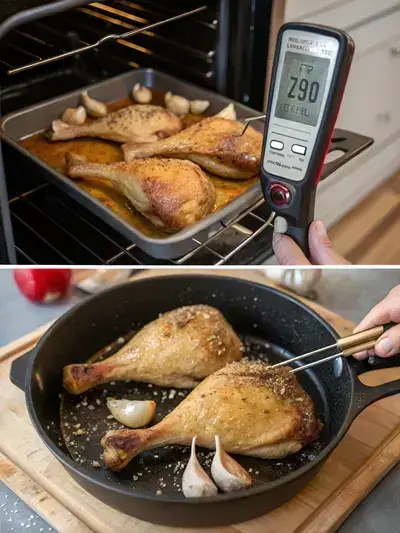
Step 1: Preheat the Oven
Preheat your oven to 375°F (190°C). This will ensure your legs cook evenly and get that perfect crispy skin.
Step 2: Prepare the Duck Legs
Pat the legs dry with a paper towel. Season both sides generously with salt and pepper. This simple step enhances the flavor.
Step 3: Sear the Duck Legs
In a cold ovenproof skillet, place the duck legs skin-side down. Turn the heat to medium and cook for 6–8 minutes until the skin is golden and the fat has rendered. Enjoy the sizzle!
Step 4: Add Flavor
Carefully flip the duck legs over. Add minced garlic and fresh thyme around them for an aromatic touch. Now, it’s time to transfer the skillet to the oven.
Step 5: Roast the Duck Legs
Roast in the oven for 25–30 minutes. The meat should be tender, and the internal temperature should reach 165°F (74°C). Your kitchen will smell amazing!
Step 6: Rest and Serve
Remove the legs from the oven and let them rest for 5 minutes before serving. This helps the juices redistribute, making every bite juicy and flavorful.
Recipe Snapshot
| Feature | Details |
|---|---|
| Category | Main Course |
| Cuisine | French |
| Prep Time | 10 minutes |
| Cook Time | 30 minutes |
| Extra Time | 5 minutes (resting) |
| Total Time | 45 minutes |
| Dietary | Not specified |
| Serves | 4 |
| Best Served | Crispy and juicy, straight from the oven! |
Pro Tips for Making Duck Legs
- Score the skin to help render fat and achieve crispiness.
- Season generously with salt and herbs for maximum flavor.
- Start cooking at a lower temperature to keep the meat juicy.
- Let the legs rest after cooking for tender results.
- Pair with a fruity sauce, like cherry or orange, for a delightful contrast.
How to Serve this duck legs
- Serve with creamy mashed potatoes for a comforting side.
- Pair with roasted seasonal vegetables for a colorful plate.
- Top with a tangy cherry or cranberry sauce for a fruity kick.
- Enjoy alongside a fresh arugula salad with lemon vinaigrette.
- Serve with fluffy rice or quinoa to soak up the delicious juices.
- Garnish with fresh herbs like thyme or parsley for a pop of color.
Make Ahead and Storage
Storing and reheating duck legs is simple and keeps them delicious!
Storing Leftovers
- Allow duck legs to cool completely.
- Place in an airtight container.
- Store in the refrigerator for up to 3 days.
Freezing
- Wrap each duck leg tightly in plastic wrap.
- Place wrapped legs in a freezer-safe bag or container.
- Label with the date and freeze for up to 3 months.
Reheating
- Preheat oven to 350°F (175°C).
- Place legs on a baking sheet.
- Cover with foil to retain moisture.
- Heat for about 20-25 minutes or until warmed through.
Explore more easy breakfast recipes, quick lunch ideas, cozy dinner meals, tasty snacks, and delightful dessert.
Final Thoughts
Now that you have this easy oven-baked duck legs recipe in your hands, it’s time to savor the deliciousness! Picture the crispy skin and juicy meat, all with minimal effort. Gather your loved ones, share a meal, and create memories around the table. Enjoy every bite, and remember, cooking can be both simple and incredibly rewarding!
Quick answers
Frequently asked questions
Straight answers from the kitchen — storage, swaps, and common sticking points for this recipe.
What is the best way to cook duck legs?
Are duck legs good to eat?
How to make crispy duck legs?
How long does a duck leg take in the oven?
Kitchen notes
Nutrition & sources
Calorie and nutrition figures on this page are estimates meant for general home-cooking guidance. Actual values vary with brands, portion size, and how the recipe is prepared.
Estimates draw on typical ingredient data from public nutrition databases such as the USDA FoodData Central. They are not a substitute for professional medical or dietary advice.
For how recipes are tested and when pages are updated, see How we test recipes. Full legal context lives in our disclaimers and affiliate disclosure.


Comments
Made this recipe? Share how it turned out for your family.
No comments yet — be the first to leave a note.