

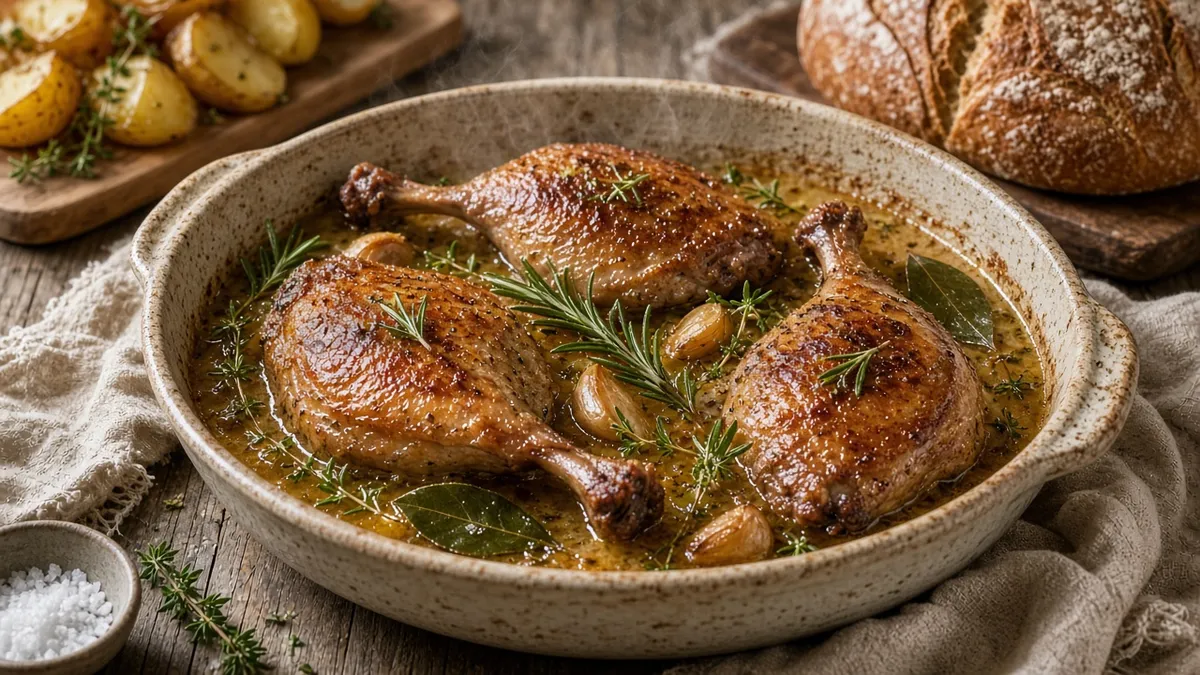
Recipe card
Print / PDFClassic Duck Confit
Rate this recipe
Be the first to rate
- Prep Time
- 24 hrs 20 mins
- Cook Time
- 3 hrs 20 mins
- Extra Time
- 24 hrs
- Total Time
- 15 hrs 40 mins
Ingredients
- 4 duck legs, about 8 ounces each
- 2 tablespoons kosher salt
- 1 teaspoon freshly ground black pepper
- 4 garlic cloves, finely chopped
- 6 fresh thyme sprigs
- 2 bay leaves, crumbled
- 4 cups rendered duck fat, or enough to cover the duck legs
- 1 teaspoon dried lavender, optional
Equipment
- Deep baking dish — Use a snug dish that keeps the duck legs fully covered by fat.
- Aluminum foil — Use it to seal the baking dish during slow cooking.
- Wire rack — Place over a rimmed baking sheet for draining and crisping.
- Instant-read thermometer — Check that the duck reaches at least 165°F.
- Small mixing bowl — Use it to combine the salt and herbs.
Method
- 1
Pat the duck legs dry with paper towels.
- 2
Rub the duck legs with the salt, pepper, garlic, thyme, bay leaves, and lavender.
- 3
Cover the dish and refrigerate the seasoned duck legs for 12 to 24 hours.
- 4
Preheat the oven to 250°F.
- 5
Brush the seasoning from the duck legs without rinsing them.
- 6
Arrange the duck legs skin side down in a deep baking dish.
- 7
Pour the duck fat over the duck legs until they are fully submerged.
- 8
Cover the baking dish tightly with foil.
- 9
Bake the duck legs for about 3 hours, until the meat is very tender and reaches at least 165°F internally.
- 10
Transfer the duck legs to a wire rack and let them drain for 10 minutes.
- 11
Increase the oven temperature to 425°F.
- 12
Roast the duck legs skin side up for 15 to 20 minutes, until the skin is crisp and golden.
Notes
| Nutrient | Amount per Serving |
|---|---|
| Calories | 520 |
| Fat | 38g |
| Protein | 38g |
| Carbs | 2g |
Why You'll Love This Duck Confit
- Duck legs become wonderfully tender and flavorful after a gentle, slow cook.
- Crisp golden skin gives every bite a special Sunday dinner feeling.
- Simple herbs, garlic, and duck fat create rich French-inspired flavor.
- Most of the cooking time is hands-off, leaving you free to prepare the rest of the meal.
- It is an impressive main course that feels warm, generous, and comforting.
Ingredients
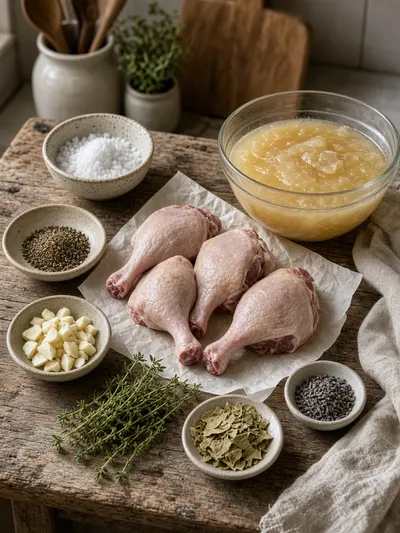
Gather a few classic ingredients to make this duck confit rich, fragrant, and tender. The duck fat should fully cover the legs while they cook slowly.
- Duck legs - 4, about 8 ounces each
- Kosher salt - 2 tablespoons
- Freshly ground black pepper - 1 teaspoon
- Garlic cloves - 4, finely chopped
- Fresh thyme sprigs - 6
- Bay leaves - 2, crumbled
- Rendered duck fat - 4 cups, or enough to cover the duck legs
- Dried lavender - 1 teaspoon, optional
How to Make Duck Confit
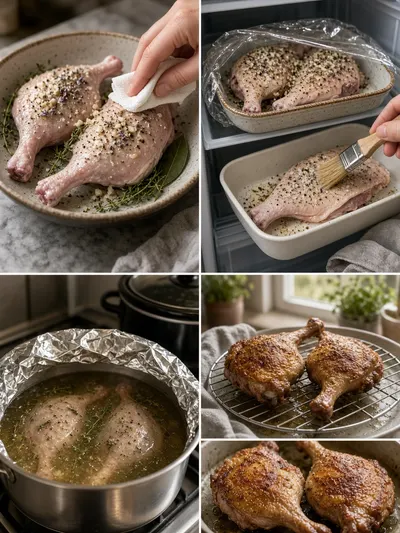
Plan for 20 minutes of preparation, 12 to 24 hours of curing, and about 3 hours 20 minutes of cooking and resting. The long, gentle cook is what gives duck confit its tender texture.
Step 1: Pat the Duck Dry
Pat the duck legs dry with paper towels. Removing excess moisture helps the seasoning cling and encourages the skin to crisp later.
Step 2: Season the Duck
Rub the duck legs with the salt, pepper, garlic, thyme, bay leaves, and lavender if using. Coat both sides well so the flavors can work into the meat.
Step 3: Cure the Duck
Cover the dish and refrigerate the seasoned duck legs for 12 to 24 hours. This resting time seasons the meat deeply and helps it stay tender.
Step 4: Preheat the Oven
Preheat the oven to 250°F. A low oven keeps the duck cooking gently in the fat without drying the meat.
Step 5: Brush Away the Seasoning
Brush the seasoning from the duck legs without rinsing them. Leaving the duck unrinsed helps preserve its flavor while removing excess herbs and garlic from the surface.
Step 6: Arrange the Duck
Arrange the duck legs skin side down in a deep baking dish. Keep the legs in a single layer so they cook evenly.
Step 7: Add the Duck Fat
Pour the duck fat over the duck legs until they are fully submerged. Complete coverage protects the meat as it cooks slowly.
Step 8: Cover the Dish
Cover the baking dish tightly with foil. A snug cover helps hold in moisture and keeps the fat at an even temperature.
Step 9: Cook Until Tender
Bake the duck legs for about 3 hours, until the meat is very tender and reaches at least 165°F internally. The meat should feel soft when tested carefully with a fork.
Step 10: Drain the Duck
Transfer the duck legs to a wire rack and let them drain for 10 minutes. This gives excess fat time to drip away before the final roasting.
Step 11: Increase the Heat
Increase the oven temperature to 425°F. The hotter oven will quickly render and brown the skin.
Step 12: Crisp the Skin
Roast the duck legs skin side up for 15 to 20 minutes, until the skin is crisp and golden. Watch closely near the end so the skin browns beautifully without burning.
Recipe Snapshot
| Feature | Details |
|---|---|
| Category/Course | Dinner, Main course |
| Cuisine | French |
| Prep Time | 20 minutes |
| Cook Time | 3 hours 20 minutes |
| Extra Time | 12 to 24 hours curing |
| Total Time | 15 hours 40 minutes |
| Dietary | Gluten-free |
| Serves | 4 |
| Best Served | Warm with potatoes, greens, or a crisp salad. |
Pro Tips for Making Duck Confit
- Use a deep baking dish that keeps the duck legs close together so the fat can cover them completely.
- Do not rinse the duck after curing. Brushing away the extra seasoning keeps the flavor rich without adding water.
- Let the cooked legs drain before the final roast so the skin has the best chance of turning crisp.
- Use a thermometer to confirm the duck reaches at least 165°F internally.
- Save strained duck fat for roasting potatoes or vegetables, and refrigerate it promptly in a covered container.
How to Serve Duck Confit
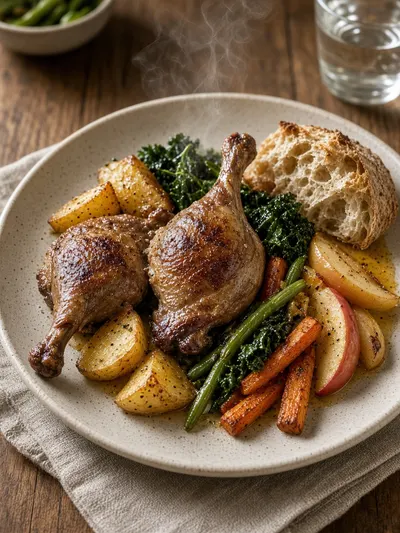
- Serve the crisp duck legs with roasted potatoes cooked in a little reserved duck fat.
- Add simple braised greens, green beans, or a fresh salad to balance the richness.
- Spoon a little of the warm pan fat over crusty bread for a cozy accompaniment.
- Pair the duck with roasted carrots, parsnips, or apples for a lovely sweet contrast.
Make Ahead and Storage
Storing Leftovers
- Cool leftover duck promptly, then place it in an airtight container and refrigerate within 2 hours.
- Store the duck for up to 3 days in the refrigerator.
- Keep the duck covered to prevent it from drying out or absorbing other refrigerator odors.
Freezing
- Remove the meat from the bones if desired, then wrap portions tightly and place them in a freezer-safe container.
- Freeze for up to 2 months for the best quality.
- Thaw frozen duck overnight in the refrigerator before reheating.
Reheating
- Place the duck skin side up on a baking sheet and warm it in a 375°F oven until heated through.
- For crispier skin, raise the oven to 425°F for the final few minutes, watching carefully.
- Reheat leftovers only once, and make sure they are hot throughout before serving.
Explore more easy breakfast recipes, quick lunch ideas, cozy dinner meals, tasty snacks, and delightful dessert.
Final Thoughts
This classic duck confit is a lovely recipe to keep for a special family dinner, with tender meat and crisp skin that make every serving feel wonderfully memorable.
FAQs
Here are a few helpful answers for making duck confit with confidence.
Can I make duck confit without lavender?
Yes. Lavender is optional, so you can leave it out and still enjoy deeply savory duck flavored with garlic, thyme, bay leaves, salt, and pepper.
How do I know when the duck is done?
The meat should be very tender, and the thickest part of each leg should reach at least 165°F when checked with a food thermometer.
Can I use another cooking fat?
Rendered duck fat gives the most traditional flavor and texture. Use enough duck fat to fully submerge the legs, as partial coverage can lead to uneven cooking.
Why is my duck skin not crisp?
Let the legs drain before roasting, keep them skin side up, and use the hotter 425°F oven for the final roast. Patting away excess surface fat can also help the skin brown.
Kitchen notes
Nutrition & sources
Calorie and nutrition figures on this page are estimates meant for general home-cooking guidance. Actual values vary with brands, portion size, and how the recipe is prepared.
Estimates draw on typical ingredient data from public nutrition databases such as the USDA FoodData Central. They are not a substitute for professional medical or dietary advice.
For how recipes are tested and when pages are updated, see How we test recipes. Full legal context lives in our disclaimers and affiliate disclosure.


Comments
Made this recipe? Share how it turned out for your family.
No comments yet — be the first to leave a note.