
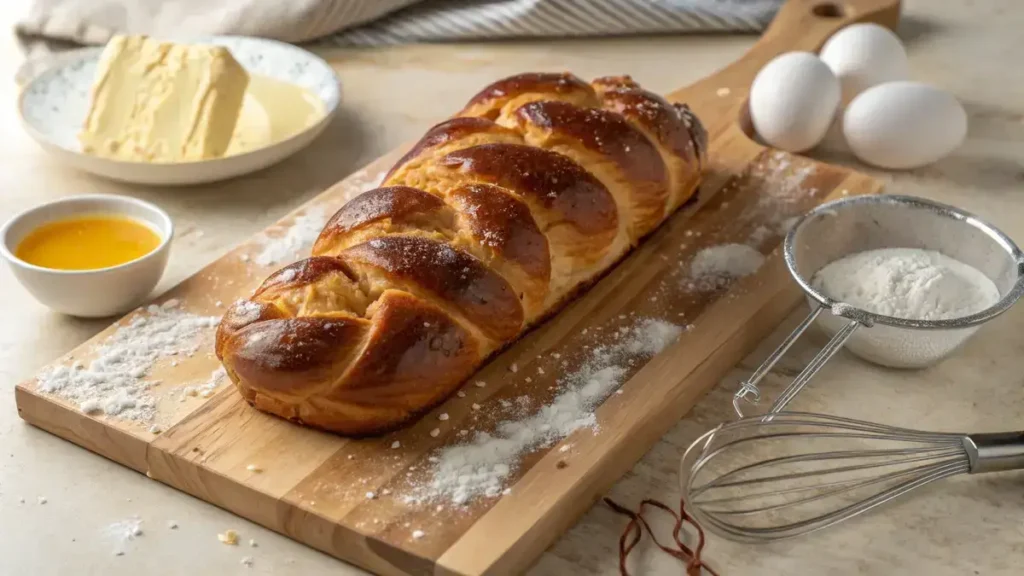
Brioche loaf fills the kitchen with the comfort of childhood mornings, its golden crust breaking open to reveal a soft, cloudlike crumb. Rich butter, fresh eggs, a touch of honey, and gentle vanilla turn simple ingredients into something truly special. Pulling warm slices from the loaf feels like a cozy ritual, with an aroma that wraps around you and a texture that melts on your tongue. Enjoy brioche loaf with homemade jam or all on its own, and let this tender, buttery bread bring everyone together in the simplest, most comforting way.
Table of Contents
Why You’ll Love This brioche loaf
- It’s incredibly soft and fluffy, making every slice a delight.
- The buttery flavor elevates any meal, from breakfast to dessert.
- Perfect for toasting or making indulgent French toast.
- It’s a fun baking project that fills your home with a heavenly aroma.
- Versatile enough to pair with sweet or savory toppings.
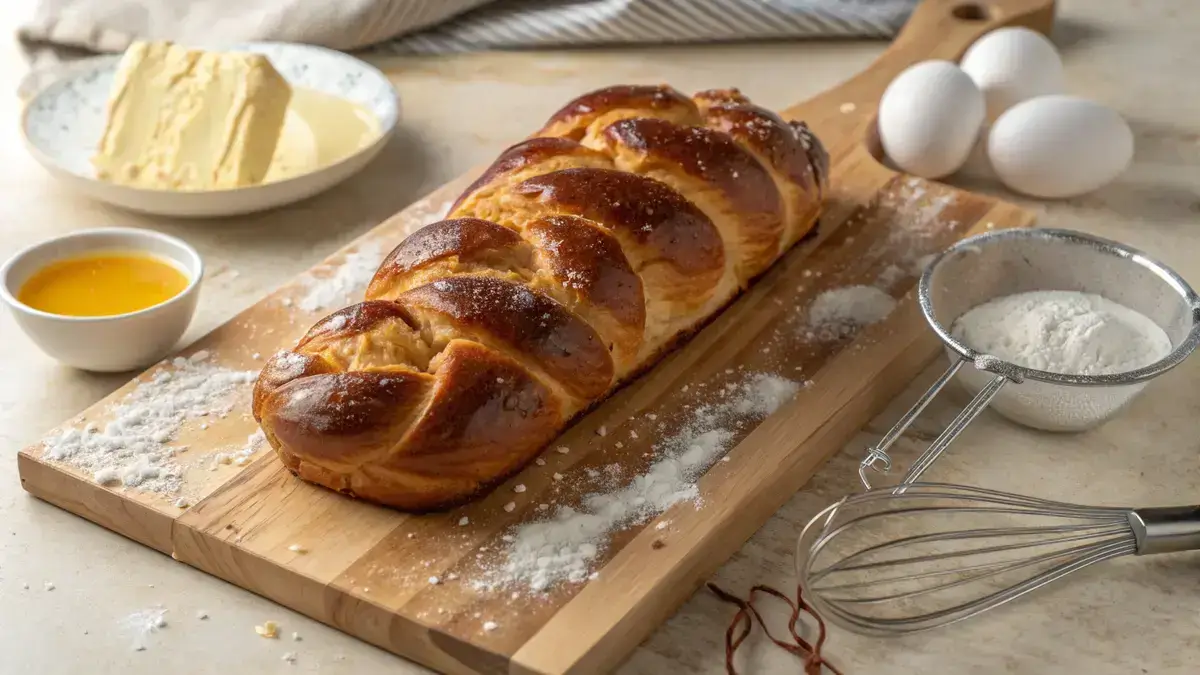
brioche loaf
Ingredients
Equipment
Method
- In a large bowl, combine flour, sugar, salt, and yeast. Make sure to keep the yeast and salt on opposite sides of the bowl.
- Warm the milk to about 30°C. Whisk in the four eggs until well combined.
- Gradually pour the egg and milk mixture into the dry ingredients while mixing on low speed until a rough dough forms.
- Increase the mixer speed to medium and knead for 5–7 minutes until the dough is smooth and elastic.
- With the mixer running, add the softened butter in cubes, one at a time. Allow each piece to incorporate before adding the next.
- Continue kneading for another 10–12 minutes until the dough is glossy and passes the windowpane test.
- Transfer the dough to a lightly greased bowl, cover, and let it rise at room temperature for 1–2 hours or until doubled in size.
- Punch down the dough, divide it into three equal pieces, and roll each into a long strand.
- Braid the strands together and place the loaf into a greased 9×5-inch loaf pan.
- Cover and proof for another 45–60 minutes until risen to just above the pan rim.
- Preheat the oven to 180°C (350°F). Brush the loaf with beaten egg for a glossy crust.
- Bake for 30–35 minutes until golden brown and the internal temperature reaches 90°C (195°F).
- Allow the brioche to cool in the pan for 10 minutes, then transfer to a wire rack to cool completely before slicing.
Notes
| Nutrition Facts | Per Serving |
|---|---|
| Calories | 300 |
| Fat | 15g |
| Protein | 8g |
| Carbs | 35g |
Ingredients
Gather these delicious ingredients for your homemade brioche loaf!
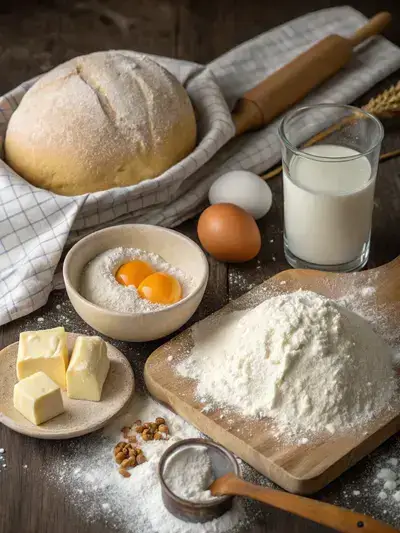
- 500g strong white bread flour – for a great structure and texture
- 60g caster sugar – adds sweetness and helps with browning
- 10g salt – enhances flavor
- 10g instant yeast – helps the dough rise
- 4 large eggs – gives richness and moisture
- 100ml whole milk – adds creaminess
- 250g unsalted butter, softened – for that buttery goodness
- 1 egg (for egg wash) – for a shiny finish
How to Make brioche loaf
This delightful brioche loaf requires about 20 minutes of preparation time, 30–35 minutes of baking time, and an additional 2–3 hours for rising and proofing. Get ready to enjoy a soft, fluffy, and buttery bread that’s perfect for any occasion!
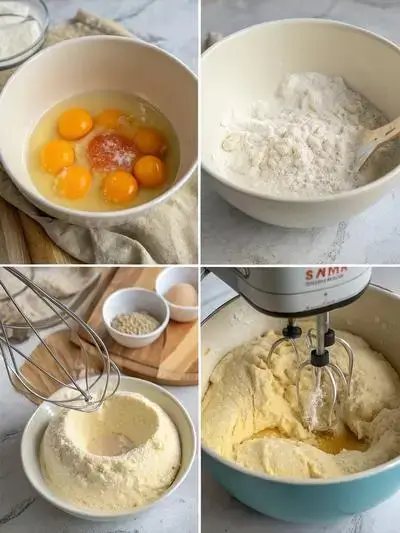
Step 1: Combine Dry Ingredients
In a large bowl, combine flour, sugar, salt, and yeast. Make sure to keep the yeast and salt on opposite sides of the bowl.
Step 2: Prepare Wet Ingredients
Warm the milk to about 30°C. Whisk in the four eggs until well combined.
Step 3: Mix Ingredients
Gradually pour the egg and milk mixture into the dry ingredients while mixing on low speed until a rough dough forms.
Step 4: Knead the Dough
Increase the mixer speed to medium and knead for 5–7 minutes until the dough is smooth and elastic.
Step 5: Add Butter
With the mixer running, add the softened butter in cubes, one at a time. Allow each piece to incorporate before adding the next.
Step 6: Continue Kneading
Continue kneading for another 10–12 minutes until the dough is glossy and passes the windowpane test.
Step 7: First Rise
Transfer the dough to a lightly greased bowl, cover, and let it rise at room temperature for 1–2 hours or until doubled in size.
Step 8: Shape the Dough
Punch down the dough, divide it into three equal pieces, and roll each into a long strand.
Step 9: Braid the Dough
Braid the strands together and place the loaf into a greased 9×5-inch loaf pan.
Step 10: Second Rise
Cover and proof for another 45–60 minutes until risen to just above the pan rim.
Step 11: Preheat Oven
Preheat the oven to 180°C (350°F). Brush the loaf with beaten egg for a glossy crust.
Step 12: Bake the Loaf
Bake for 30–35 minutes until golden brown and the internal temperature reaches 90°C (195°F).
Step 13: Cool the Loaf
Allow the brioche to cool in the pan for 10 minutes, then transfer to a wire rack to cool completely before slicing.
Recipe Snapshot
| Feature | Details |
|---|---|
| Category | Breakfast |
| Cuisine | French |
| Prep Time | 20 minutes |
| Cook Time | 35 minutes |
| Extra Time | 180 minutes (rising and proofing) |
| Total Time | 235 minutes |
| Dietary | Vegetarian |
| Serves | 1 loaf |
| Best Served | Freshly sliced with butter or jam! |
Pro Tips for Making brioche loaf
- Use high-quality butter for a rich flavor.
- Let the dough rise in a warm place for best results.
- Don’t rush the kneading; it develops the perfect texture.
- Chill the dough before shaping for easier handling.
- Brush with egg wash for a beautiful golden crust.
How to Serve this brioche loaf
- Spread with creamy butter and a sprinkle of sea salt for a simple treat.
- Top with your favorite jam or fruit preserves for a sweet breakfast.
- Make French toast by soaking slices in a cinnamon-vanilla egg mixture.
- Serve alongside a warm bowl of soup for a comforting meal.
- Use as a base for decadent sandwiches with turkey and avocado.
- Pair with a rich chocolate spread for an indulgent dessert.
- Toast slices and add a dollop of ricotta and fresh berries for a delightful snack.
Make Ahead and Storage
You can easily prepare and store your brioche loaf for later enjoyment:
Storing Leftovers
- Allow the brioche to cool completely.
- Wrap it tightly in plastic wrap or aluminum foil.
- Store in an airtight container at room temperature for up to 2 days.
- For longer storage, refrigerate for up to a week.
Freezing
- Slice the brioche loaf for easy use.
- Wrap each slice in plastic wrap, then in aluminum foil.
- Place wrapped slices in a freezer-safe bag or container.
- Freeze for up to 3 months for best quality.
Reheating
- For slices, toast them in a toaster or toaster oven.
- For the whole loaf, preheat the oven to 350°F (175°C).
- Wrap the loaf in foil and heat for about 10-15 minutes.
- Enjoy warm for the best texture and flavor.
Explore more easy breakfast recipes, quick lunch ideas, cozy dinner meals, tasty snacks, and delightful dessert.
FAQs
Here’s a helpful FAQ about this recipe:
1. What makes brioche different from bread?
Brioche is a rich, buttery bread that stands out from regular bread due to its high fat content, which comes from butter and eggs. This unique combination gives brioche its soft, fluffy texture and slightly sweet flavor, making it a delightful treat for breakfast or dessert. Unlike standard bread, which is typically made with just flour, water, yeast, and salt, brioche incorporates these additional ingredients, resulting in a more indulgent loaf.
2. What is a brioche loaf?
A brioche loaf is a type of bread that is light, airy, and rich in flavor, thanks to the generous use of butter and eggs in the dough. It is often shaped into a loaf or braided form and can be enjoyed on its own or used for various dishes, such as French toast or sandwiches. The texture is soft and tender, making it a favorite for many bread lovers around the world.
3. What is brioche loaf good for?
Brioche loaf is incredibly versatile! It can be enjoyed fresh with a pat of butter, used to make delicious French toast, or transformed into decadent bread pudding. Additionally, its rich flavor makes it an excellent choice for sandwiches, especially when paired with sweet or savory fillings. Whether for breakfast, brunch, or dessert, brioche loaf adds a touch of luxury to any meal.
4. What are the disadvantages of brioche bread?
While brioche bread is delicious, it does have a few disadvantages. Its high fat content means it can be more calorie-dense than regular bread, which may not be suitable for those watching their calorie intake. Additionally, brioche can be more challenging to make due to the need for precise measurements and techniques to achieve the perfect texture. Lastly, it has a shorter shelf life compared to other breads, as it can dry out more quickly without preservatives. However, these factors are often outweighed by its delightful taste and texture!
Final Thoughts
There’s nothing quite like the aroma of a freshly baked brioche loaf wafting through your kitchen! This recipe is not just simple; it’s a delightful journey into the world of baking. So, roll up your sleeves, gather your ingredients, and enjoy the process. Your taste buds will thank you for this soft, fluffy, and buttery treat!